Feeds:
Posts
Comments

1-year Blogiversary


It has officially been one year since I started blogging (1 year and 4 days if you’re being exact).  Starting blogging as I started third year medical school was probably not one of my smartest moves.  Third year medical is tough, mainly by being incredibly demanding of your time and sanity. All the same, I’m really glad that I finally started putting words-to-website and getting some of my thoughts out there for others to read.  Blogging is something I had wanted to do for a while, but wonderful people though they are, I think my parents might have disowned me if I’d started writing a blog before I’d finished writing my thesis!


Starting blogging during my clinical years has led to a couple things. First- I haven’t been able to put the requisite time into a number of the topics I originally wanted to write about (though I plan to get to these topics eventually!). Second- I’m surprised by how much I want to write about clinical situations and my general experiences on the floors. Together, this means that my blog is slightly different that I had initially imagined and that I have a long list of potential future blog posts (as well as a folder on my desktop with a significant number of “started posts” that may never see the light of day or the glint of a readers eye).


I sincerely want to thank everyone who has joined me over the past year on my blogging journey. I deeply appreciate that you take the time to read my musings. I really enjoy getting comments and I apologize that I sometimes get too caught up to reply to all the thoughtful responses.


I also want to thank everyone who has shared my blog and my posts.  I’ve had a couple big days when some rather “big shot” bloggers have shared my posts (most recently Mark Sisson gave me a big bump when he shared my snuggling post in last week’s “Link Love”) but I really appreciate (and am humbled) that readers like my posts enough to share them on facebook and twitter . One of the fun elements of having a blog (at least for those with a significant nerdy streak) is keeping an eye on the statistics generated by your blog host… more on that later!


Exciting News…


I’m very excited to announce that I have been invited to speak at the 2013 Ancestral Health Symposium this August in Atlanta.  I attended the last year’s conference in Boston, and am excited to be speaking on one of my favorite subjects, lipids and liver, at this year’s event.  Tickets are already on sale for society members and early registration starts for non-members on March 15th. The symposium sold out the last two years, so if you plan to attend make sure you reserve your tickets early!


In addition to giving a talk on liver and lipids, I’ll also be heading up a panel of ancestrally minded physicians.  The details are yet to be settled, but with a panel including Dr. Emily Deans (of Evolutionary Psychiatry), Dr. Anastasia Boulais (of Primal Med Ed), Dr. Jacob Egbert, and Dr. Don Wilson, I’m sure there will be some interesting discussion exploring how to use ancestral and evolutionary thinking in a variety of clinical fields including psychiatry, hospitalist practice, physiatry, and ob/gyn respectively.  More details to follow!


Fun with Stats…


As I mentioned above, one of the joys of having a blog (at least for those of us with a nerdish interest in numbers) is keeping an eye on the blog’s stat page.  In addition to showing me which posts are popular and why, it also shows me the search terms that navigate people to my page.  “Principle Into Practice” is a popular google search that navigate people to my page.  Some of the more obscure ones are a little more puzzling (and amusing).  Here are some favorites:

Help me, I’m dating a medical resident

– “Dating in medical school”, “dating a medical student”… some variation on this theme is one of the more popular phrases that gets people to my blog, no doubt linking them to this post . I’m sure that’s not the kind of dating advice the googlers were looking for- sorry!  As for actually dating a med student? Good luck… the first two years are probably more “dating friendly” as the schedule (at least at my school) is quite flexible, but my experience with third year is that your time is generally spent in the hospital or sleeping.  Date a med student at your own peril- they will undoubtedly want to practice physical exam skills on you and they’re probably a bit short on time for making much of a relationship. Also, if you think dating a medical student is bad, I can only imagine the horror that is “dating a medical intern”. Their schedule makes a med-student’s schedule look like a walk in the park!

Can you burst your appendix by eating a lot of pickles

-Umm… no

Can you get out of the country if you have c difficile

– Actually, a lot of people are walking around with C. diff in their system. Problems arise when you have an overgrowth, at which point you probably can’t be anywhere too far from a toilet… (and you need prompt medical attention)

Victoria Principle nude

-This web-surfer undoubtably went away disappointed…


Asparagus therapy and human parasites

also

C. diff and asparagus

-I got nothing…

How to sleep during medical school

– My answer? As much as you can, whenever you can.  Refer back to “dating a medical student” if you’d like.

What speciality [sic] in medicine combines clinical practice and evolutionary theory

– I’m not sure, but if you figure it out, please let me know! (Actually, as I’ve argued before, I think there’s a need for an evolutionary perspective in ALL fields of medicine, though perhaps some have more opportunities for evolutionary thinking than others.)


Most search terms guide the seeker to appropriate pages, and I hope that my posts enlighten and entertain.  Many of my favorite posts, some of which are also my most popular posts, can be found here on my “Favorites” page, if you’re ever looking for some interesting posts you might have missed!


A final thanks….


I said it before; I’ll say it again.  Thank you to everyone who reads, shares, and/or comments on my blog.  It’s been a fun year of blogging and I’m looking forward to more posts, speaking at AHS 2013, and continuing to interact with readers, friends, and those who share an interest in ancestral health and evolutionary medicine… and also those who are curious about dating in med school! 🙂

Scientific journals aren’t for everyone. Journal articles use technical writing and can be rather dry. They can be long, they can be dull, they can show nothing new and exciting, or the research they describe can be so poorly thought out you wonder how a reviewer ever allowed the paper to go to the presses. Many good article are behind pay walls, so even if you want to read them, sometimes you can’t.


Fortunately an abstract of most papers can be found for free.  An abstract is a brief summation drawn up by the authors to get their point across.  Maybe it’s just me, but I sometimes think that abstracts can be a bit like movie trailers- they introduce the major players and they give you a general plot of the movie (and they try and hook you in by showing you all the good scenes).


Like a movie trailer, abstracts can be deceiving.  Take the trailer for The Matrix Reloaded– how excited were you when you first saw that trailer? How much did you wish the movie had never been made after you saw the actual feature?


Unfortunately, while in the cinematic world people are unlikely to act like they’ve seen the whole movie when all they’ve done is watch a trailer, in the world of scientific literature it often seems that people assume that reading the abstract is as good as reading the paper.


It is not.


The list of examples is endless, but this morning I stumbled across an example of this that finally pushed me to write about abstract abstraction.


It all started when I saw a tweet proclaiming “A high saturated fat mixed meal induces inflammation & insulin resistance & elevated glucose cf [compared to] other types of fats”.  Considering my interest in fats and my particular fondness for saturated fats you may not be surprised to hear that I decided to dig a little deeper.


The paper is from an open access journal. The full text is available here.


To be fair, the title of the paper is not quite as sensational as the tweet that led to it- The effect of two iso-caloric meals containing equal amounts of fats with a different fat composition on the inflammatory and metabolic markers in apparently healthy volunteers– but the “conclusions” offered in the abstract (the line that anyone who is just skimming the article will jump to) is rather dubious:


Metabolic and modest inflammatory changes occur within a few hours after the ingestion of a high SFA meal in apparently healthy adults.


I don’t have the time or the inclination to totally dismantle this paper (I really wonder how they did their statistics to show there was a significant difference), but I do want to point out how unwise it can be to draw conclusions from this abstract.


Let’s compare the methods sections. In the abstract, the authors say that healthy participants “were given two iso-caloric meals with similar amounts but different composition of fats: a meal high in monounsaturated fats (MUFA), and a meal high in saturated fat (SFA).”


The methods section in the paper reveals more detail:


The chosen meals represented two very popular meals habitually preferred by the general population: 1. Chicken sausages with fried potatoes, ketchup and mayonnaise (defined as SFA); 2. Pasta with olive oil, ketchup and nuts (defined as MUFA).


Seriously?


Two entirely different meals, and we’re supposed to believe that any differences in blood markers (of which I am skeptical) are due to the change in the type of fat- fat types that aren’t particularly well represented in at least one of the meals.  Chicken is not high in saturated fat.  Chicken fat is predominantly unsaturated, a combination of MUFA and polyunsaturated fats (PUFA), with less than a third of chicken fat being saturated.  What were the potatoes fried in? These days most things are fried in PUFA rich vegetable oils not SFA rich animal fats or coconut oil.  And mayonnaise? Mayonnaise contains very little saturated fat (because it’s usually made with PUFA-rich vegetable oils).  At least the second diet utilizes olive oil, which is rich in MUFA.


The authors state that they used the Israeli Food Database to calculate the breakdown of SFA:MUFA:PUFA in each diet and that the “SFA” and “MUFA” diets contained 24:33:17g and 8:51:14g respectively. Without knowing more about the ingredients (what fats and oils were used in the SFA diet and what nuts were used in the MUFA diet) it’s hard to know if the breakdown is accurate.  The meals are so different in every regard, it’s silly to quibble over the exact proportion of each fatty acid type.


The point of this post isn’t (or wasn’t) to pick this paper apart.  The purpose was to show that we should be cautious when drawing conclusions from abstracts.


The authors chose to say that any changes (that may or may not be real) occurred after “the ingestion of a high SFA meal”, but they could equally have said “after the consumption of mayonnaise (or potatoes)”… Likewise, they could have claimed that pasta (or nuts) “protects against metabolic changes induced by ketchup”. Of course, all of these claims would be ridiculous- though perhaps less ridiculous than suggesting any changes were due to ingestion of a high SFA meal (something they didn’t even test)!


‘Tis the season for cheesy cards, overpriced restaurant dinners, flowers, chocolates, jewelry, and stuffed animals.  I’ll admit that I’ve never been a huge fan of Valentine’s Day.  We started off on the wrong foot, with those awkward grade-school valentine exchanges, and I’ve never seen eye-to-eye with Valentine’s day over the crass-consumerism that seems part-and-parcel with this holiday.  That, and even in my most desperate days I could never understood the gustatory appeal of candy hearts.


This year, instead of doing my best to ignore the day, I thought I’d have a little fun. I’ve said it before and I’ll say it again: evolution is everywhere. This is never more true than in the bedroom!


Snuggling, cuddling, spooning… name your term.  


Why do humans like to cuddle?  There are a number of arguments that can be made for snuggling.  Physical contact in the form of massage increases levels of the “love” hormone oxytocin [1] and decreases cortisol [2] (though some of the data on massage is fuzzy, perhaps because massage, especially in a research setting, can be a rather impersonal experience in comparison to cuddling).  More frequent hugs increase oxytocin levels and lead to lower blood pressure and heart rate in premenopausal women [3]. An interventional trial that looked at the effects of “warm touch” (including hand-holding, hugs, and “cuddling up”) in married couples showed an increase in salivary oxytocin (in husbands and wives) and a decrease in systolic BP (in husbands only) in the treatment group [4].


Increased oxytocin seems to enhance the effects of social support on stress responses [5].  Oxytocin also plays a role in the early stages of romantic attachment, and encourages pair-bonding (and parental attachment) [6]. But oxytocin isn’t the only compound that is altered by cuddling-up or that affects the way we feel about other people. There is also evidence that touch alters the release of endorphins[7], and that neuropeptides may play a role in the beneficial nature of physical touch [8].


On a day like Valentine’s Day, which purports to revolve around the concept of love (and chocolate sales), the arguments that physical contact reduces stress and increases the hormone associated with pair-bonding are probably king.  Recently  (and I did warn you I’m a bit cynical about this holiday), I’ve been wondering if there is something a little more… “anatomically practical” about cuddling.


Why you (men) shouldn’t “hit it and quit it”.


Anyone that has spent anytime thinking about human pair bonding has spent time thinking about short-term vs. long-term interests when it comes to the mating game. Yes, humans are predisposed to long-term bonding, but that doesn’t mean that there isn’t a significant role of short-term mating in human procreation (perhaps not as much now, thanks to social norms and the potential for paternity tests, but sources frequently cite that ~10% of children aren’t actually the offspring of the father that raises them, though a more thorough investigation shows that the rate is probably closer to 3% [9].).  As an aside, while on my EMS elective I was repeatedly subjected to the Maury Povich show and it’s ilk while hanging out at headquarters (the lounge TV was usually blaring in the background). I doubt that Frederick Sanger imagined how his great discovery of DNA sequencing would be used when he developed the method in 1975 (for which he later won a Nobel prize in Chemistry- his second). “You are NOT the father!!!” But I digress…


Different species have various ways of decreasing paternity uncertainty.  Some animals- canines for example- have a very… awkward (maybe I’m being anthropomorphic, I apologize) way of increasing the likelihood of paternity. After the completion of mating, the male doesn’t leave the female’s side. He can’t. Seriously. He is physically attached.


Dog mating is significantly different from that of humans. When the dog’s penis is first inserted into the vagina it isn’t actually erect and is only able to penetrate thanks to the penis bone, also known as the baculum. After insertion, the penis swells and the bulbus glandis at the base of the penis literally locks the penis in place, preventing the removal of the penis. This is known as “knotting” or “tying”.  This cumbersome position usually lasts 5-20 minutes after ejaculation.


At least one book on dog genetics says that this process seems “quite irrational”, but the authors submit that it “must serve a purpose as it has remained despite apparent drawbacks, such as vulnerability to attacks during the act.” [10]. I doubt I’m the first to suggest that the advantage of this prolonged intimacy is an increase in certainty of paternity.  It seems rather obvious that this method of copulation gives the lucky suitor’s sperm time to gain advantage in the race to fertilization, before another competitor’s sperm can enter the race.


Fortunately, humans have not evolved this mechanism of assuring paternity. Instead, I’d argue that post-coital snuggling can offer some of the advantages of canine-coupling.


Some people might think that humans are above such an animalistic tendency. If a man doesn’t stick around long enough to ensure that his sperm have time to reach their destination, would another man’s actually get the chance?


Well maybe…  It has actually been argued that the human penis is evolutionarily shaped (literally) to help a man get his semen where it needs to be, even if it didn’t actually get there first.  In the article “The human penis as a semen displacement device*”, researchers argue that the shape of the human penis is “designed” to remove semen from the vagina during sex, clearing the way for new semen to be deposited in the most advantageous location (increasing the likelihood of paternity) [11].  This strengthens the argument that if you’re a man, and you want to ensure paternity, it’s probably best you hang around to make sure your sperm doesn’t have any competition in reaching it’s goal.


So there you have it, the “principle into practice evolutionary argument for snuggling”.  Sure, in the modern world men may not WANT paternity with every sexual encounter, but that doesn’t mean that the evolutionary mechanisms and behavioral predispositions aren’t already in place to improve paternity-certainty.  On a day like Valentine’s day, you might rather focus on how cuddling increases oxytocin, leading to emotional bonding.  Just remember that snuggling also physically bonds you, and that may not be such a bad thing…


*This paper wins the award for most giggle-worthy methods. Some of the lines could be right at home at #overlyhonestmethods. E.g.: “… this recipe was judged by three sexually experienced males to best approximate the viscosity and texture of human seminal fluid.”


1.            Morhenn, V., L.E. Beavin, and P.J. Zak, Massage increases oxytocin and reduces adrenocorticotropin hormone in humans. Altern Ther Health Med, 2012. 18(6): p. 11-8.

2.            Rapaport, M.H., P. Schettler, and C. Bresee, A preliminary study of the effects of repeated massage on hypothalamic-pituitary-adrenal and immune function in healthy individuals: a study of mechanisms of action and dosage. J Altern Complement Med, 2012. 18(8): p. 789-97.

3.            Light, K.C., K.M. Grewen, and J.A. Amico, More frequent partner hugs and higher oxytocin levels are linked to lower blood pressure and heart rate in premenopausal women. Biol Psychol, 2005. 69(1): p. 5-21.

4.            Holt-Lunstad, J., W.A. Birmingham, and K.C. Light, Influence of a “warm touch” support enhancement intervention among married couples on ambulatory blood pressure, oxytocin, alpha amylase, and cortisol. Psychosom Med, 2008. 70(9): p. 976-85.

5.            Heinrichs, M., T. Baumgartner, C. Kirschbaum, and U. Ehlert, Social support and oxytocin interact to suppress cortisol and subjective responses to psychosocial stress. Biol Psychiatry, 2003. 54(12): p. 1389-98.

6.            Schneiderman, I., O. Zagoory-Sharon, J.F. Leckman, and R. Feldman, Oxytocin during the initial stages of romantic attachment: relations to couples’ interactive reciprocity. Psychoneuroendocrinology, 2012. 37(8): p. 1277-85.

7.            Keverne, E.B., N.D. Martensz, and B. Tuite, Beta-endorphin concentrations in cerebrospinal fluid of monkeys are influenced by grooming relationships. Psychoneuroendocrinology, 1989. 14(1-2): p. 155-61.

8.            Dunbar, R.I., The social role of touch in humans and primates: behavioural function and neurobiological mechanisms. Neurosci Biobehav Rev, 2010. 34(2): p. 260-8.

9.            Anderson, K.G., How Well Does Paternity Confidence Match Actual Paternity. Current Anthropology, 2006. 47(3): p. 513-520.

10.            Ruvinsky, A. and J. Sampson, The Genetics of the Dog. http://www.google.com/books?id=bgZwjdB4xgEC&source=gbs_navlinks_s ed. 2001: Google Books.

11.            Gallup, G.G., R.L. Burch, M.L. Zappieri, R.A. Parvez, M.L. Stockwell, and J.A. Davis, The human penis as a semen displacement device. Evolution and Human Behavior, 2003. 24: p. 277-289.

There are a lot of smart people who are interested in ancestral and evolutionary health. Personally, I find it very encouraging to see people from various backgrounds thinking deeply about how looking back into human history can help us improve our present-day wellbeing.  These people come from all walks of life and each person has come to this way of thinking by a unique path, but many have similar stories.  Sharing a story breeds camaraderie, and I think part of the reason the “paleo” movement has developed such a strong online community is because of the solidarity that comes from sharing a similar personal journey (that’s not to say there isn’t division and strife in the community- there is plenty!).  Sharing core principles also promotes professional camaraderie. Alas, few of us in the medical profession share an interest in ancestral and evolutionary thinking.


I have been very fortunate in my brief clinical experience to have worked alongside and under (medical academics is definitely a hierarchy) people who have indulged me in conversations about how evolutionary and ancestral theories apply to modern medicine. But while some are happy to talk about select topics in ancestral health, few think about it deeply or use ancestral thinking in their medical practice.  There are physicians who think about ancestral health and evolutionary medicine, and I am always enthusiastic (perhaps a little bit too enthusiastic?) to meet and interact with physicians who share my academic interests.


As I said above, sharing a journey breeds camaraderie (that definitely seems to be the “word-of-the-post”), and it frequently seems that the tougher the journey, the greater the camaraderie. Medical training is a gauntlet. After an undergraduate degree, medical degree, internship, and residency (to say nothing of longer residencies, an added fellowship, or additional degree(s)), a physician in the US has spent a minimum of 11 years in “higher education” to become a practicing clinician. As I wrote in my last post, “nocturning“, clinical training is physically and mentally exhausting (and decidedly unhealthy). Other allied-health and research professionals also travel long academic roads, and surely the trials and tribulations of the academic journey of each profession fosters camaraderie within each group.  Similarly, for those of us who have achieved a PhD- we may have done research in different labs, under different mentors, and in very different fields, but there is a mutual understanding of what one endures to finally earn those three letters after one’s name.


I have been fortunate that I have built some strong personal relationships in the ancestral health community.  One of the first “ancestrally minded” people I met in real life was Dr. Emily Deans– a psychiatrist with a deep interest in the interaction between nutrition and mental health.  While we are separated by some distance, it is good to have a friend who not only shares my passion for ancestral and evolutionary health but who also understands the arduous journey of becoming a physician. In the past couple years I have also met a number of other physicians; first online, and then last August at the Ancestral Health Symposium (AHS) I had the pleasure of meeting many in person.  Less than a year ago, a few likeminded physicians thought it would be beneficial to form an organization for physicians (MDs, DOs, and international equivalents) interested in ancestral health. This idea blossomed at AHS, and in the last few months a meeting was organized to bring such an organization into fruition.


This past weekend I travelled to Salt Lake City for the Physicians and Ancestral Health (PAH) Winter Meeting.  Leaving the northeast as a blizzard approached to head to snowy Salt Lake City seemed a bit like jumping “out of the frying-pan and into the crockpot” meteorologically speaking, but personally and professionally the trip was fantastic (and people in Utah seem to handle the snow in stride, quite unlike home in the northeast!).  This was the first official meeting of PAH, and twelve physicians from around the county (and Canada) got together to discuss what we know, what we’d like to know, how to share our information, and what we need to do to grow. We discussed different types of research, the need for more research investigating and supporting an ancestral approach to medicine, and the importance of producing and publishing results.


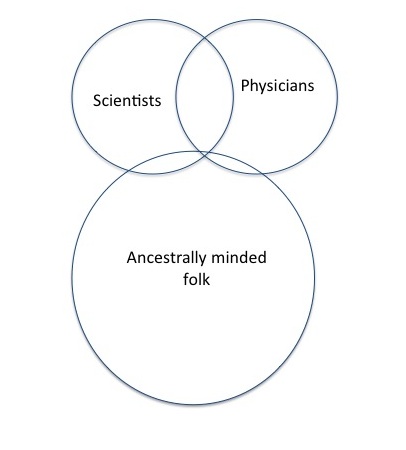
A word on research…  Physicians are not scientists (save for physician scientists, a truly minuscule blip in the Venn diagram of the ancestral health community) and while anecdotes can be powerful, they are not the kind of evidence that will sway physicians, scientists, and practice.  I recognize that as an MD/PhD student I am well positioned to make some waves in this area- I’ll try not to get too overwhelmed by the thought!  Fortunately, there are already some physician scientists producing data and publishing papers, one of whom I got to meet this weekend.


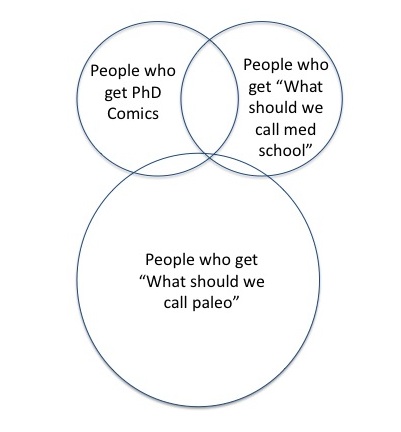
I had a bit of fun making a Venn diagram… nothing is to scale, but you get the idea…


venn


A slightly more amusing diagram might looks something like this… 


I highly recommend checking out PhDcomics.com, and “What should we call med school” as well as “What should be call paleo” if you find yourself represented above. (Sorry, I'm not blog-literate enough to hyperlink from the image!)

I highly recommend checking out PhDcomics.com, and “What should we call med school” as well as “What should be call paleo life” if you find yourself represented anywhere above. (Sorry, I’m not blog-literate enough to hyperlink from the image!)


In addition to setting up the framework for our nascent organization and discussing how we might foster ancestral-thinking in modern medicine, this meeting was an opportunity to form new friendships and strengthen old ones.  As the lone medical student at the meeting, I felt very fortunate to interact with enthusiastic and supportive physicians from several different fields who all share an interest in ancestral health.  I enjoyed talking about research with Dr. Lynda Frassetto, who’s papers I frequently reference when talking about the benefits of an “ancestral” diet. It was great to get a chance to talk about functional movement with Dr. Jacob Egbert and then go to Ute CrossFit where he led a practical session.  I’m straight out of my Ob/Gyn clerkship, so I loved sharing stories with Dr. Don Wilson, an Ob/Gyn from Canada with first hand knowledge of the health of indigenous First Nation people.  I had the chance to talk about the opportunities I’ll have if I decide to pursue a residency in family medicine with Dr. Rick Henriksen and other family docs.  It wasn’t all a rosy picture (though Rick is nothing if not enthusiastic), but I got a lot of honest and useful information from these physicians. There was also a preponderance of psychiatrists (or is that a contemplation of psychiatrists?), including my good friend Emily Deans, as well as a cardio-thoracic surgeon. I’m glad to have met Dr. Ede, and to have been introduced to her impressive website Diet Diagnosis.  It was also a pleasure to catch up with Dallas Hartwig, from Whole9 Life, who spoke with the group about functional medicine.


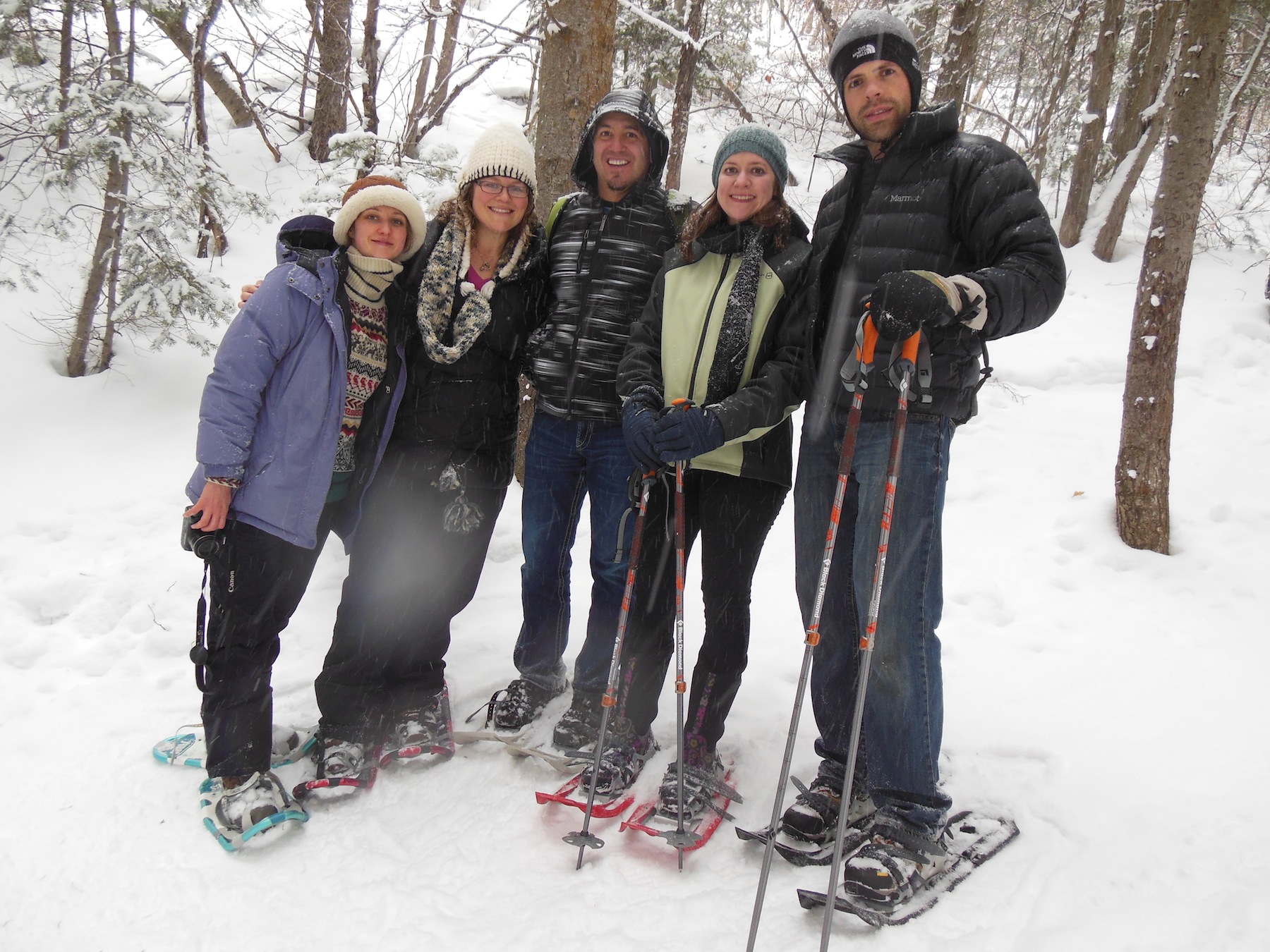
A nature break- some ancestrally minded physicians snowshoeing in Wasatch National Forest.

A nature break- some ancestrally minded physicians snowshoeing in Wasatch National Forest. From left to right, Polina Sayess, me, Don Wilson, Emily Deans, and Jacob Egbert


A lot of knowledge and information was shared this weekend, and I think we all walked away from the weekend with new friendships, a renewed sense of camaraderie with fellow physicians, and thoughts on how we can each do our part to help promote ancestral health.  Personally, I have a number of goals, not all of which I need to share.  I will say, however, that I feel there is a strong need to champion non-nutritional aspect of ancestral and evolutionary health. As the Hartwig’s book beautifully argues- It Starts with Food– but there are many other ways to incorporate ancestral and evolutionary thinking into modern medicine. That is one of my goals on this blog, though of late I have been writing more random ramblings than thoughts on distinct elements of evolutionary medicine.


As I officially make the transition from MSIII to MSIV (as of today I have completed all the 3rd year requirements of my medical degree), I hope that I’ll have more time to write about a number of topics in evolutionary medicine. Until then, I appreciate that readers follow along with my random ramblings, and am very glad that there are physicians who share a passion for understanding human health in the context of our evolutionary past.


PAH doesn’t have a website up yet, but for more information you can go here.

Nocturning

I have been a zombie today.

I’ve wanted to write this post all day, but I’ve been spinning my wheels, unable to find the focus to sit and write.

I know where my inability to focus comes from. It’s the same thing that’s been causing my insatiable hunger and serious sweet-tooth.

I had a night shift on Thursday night.

The health industry is notoriously unhealthy. Even during the best of times the medical community tends to get things wrong with seminars on preventative health being coupled with breakfasts that consist of pastries, margarine to schmear on bagels, and fat-free non-dairy creamer to opacify a foul smelling substance that masquerades as coffee.

Practicing medicine is not easy on the body.  Being a doctor is stressful and, of course, spending your days around people who are sick makes you prone to getting sick yourself.  Lack of sleep is another big problem.

Of all the clerkships that medical students rotate through, the surgical ones- surgery and obstetrics/gynecology- have the worst hours. Depending on a school’s program, this is where students first get to experience the joys (by which I mean terrors) of 24+ hour call and “night float”.

At my school, the surgery clerkship has maintained the traditional call schedule (you work a day and then when you’re on call you stay for the night and finally go home the next morning when you are “post call”), while the ob/gyn clerkship has adopted a “night float” schedule for students, where we switch from day service to night service for a few days running during the clerkship.  These two clerkships were separated by 8 months in my schedule, so it’s perhaps hard to accurately compare them.  Nonetheless, I’d like to write about my experience with these two notoriously rough clerkships.

Surgery…

My school still follows a traditional call schedule for students on the surgery clerkship: every 4th or 5th day we would be “on call” after our normal day in the hospital. For the first half of this clerkship I was at a hospital 45 minutes away from my apartment. I was up between 4:25 and 4:30 each morning to be in the hospital by 5:30 to round on my patients before we “ran the list” as a team shortly after 6 and then headed to the OR for the day.

My problems on this clerkship started early. I had just come off my psychiatry clerkship where I’d been enjoying the psyche hours of 9-4… surgery hours were a big change. I couldn’t convince myself to eat breakfast before 4:30 and instead started my mornings with 1 or 2 double-shot espressos before heading to the hospital. The hospital to which I was assigned doesn’t have great quarters for medical students on surgery, so I was left to share a miniscule locker with 3 other students.  We barely had space to store our clothes, let alone space for real food. While there was a residents’ lounge, it was adorned with a large sign warning “Med students- do not leave your shit here”, and we didn’t have access to a fridge or a microwave. Lunch was a hit-or-miss occurrence, and the general mantra for med students during a surgery rotation is “eat when you can, you don’t know when you’ll have the opportunity next.”

Here’s a classic from Whatshouldwecallmedschool

During that first month I subsisted on my morning espressos and my best attempts at healthy snacks- unsweetened banana chips, jerky, nuts, and 85% chocolate. In the evenings I’d eat a proper dinner before putting myself to bed before 9 on most nights. I occasionally managed to make it to the gym, but I tended to feel rather weak and pathetic when I managed to get in a workout. Every 4th or 5th night I was on call, and instead of heading home around 5pm as per usual, I would grab dinner in the hospital cafeteria and see patients in the emergency department and go to the OR for emergency cases.  At some point during the evening (usually between 11pm and 1am) the night resident would tell the med students to retreat to our on-call room for some sleep, promising to page us if anything interesting came through. For me, at that hospital, I was never paged during the night.

My second month of surgery was on the trauma team at our university hospital, which is a level 1 trauma center.  Start time was similar at this hospital, but I was now 25 minutes closer, giving me 25 more blissful minutes of sleep. Also, at school we have a students’ lounge with a fridge and microwave, and I was able to start eating real lunches again. I also had realized that going to the gym in my stressed and sleep-deprived state was doing me no favors so I put my gym membership on hold.  Our call schedule was similar on trauma service, but unlike the general surgery service at a community hospital, the trauma team at our inner-city hospital was constantly getting paged in the wee-hours of the morning. I don’t think I ever got more than 2 hours of sleep when I was on call, and was always woken by the screams of the pager rather than the dulcet tones of my cell phone’s alarm (I occasionally hear a pager with the same ring-tone as the trauma pager and it still sends chills down my spine).

At the first hospital, after being on call, we were usually dismissed after we “ran the list”- frequently being on the way home shortly after 7am. On trauma we would run the list, go to radiology rounds, and then physically round on our patients as a team before being sent home.  Alas, our list of patients grew malignantly during my month of trauma and at one point we had over 30 patients, with some on each floor of the hospital. After a night on trauma I would usually find myself driving home after over 30 hours in the hospital (sometimes with no sleep) willing myself to get home safely (I really didn’t want to end up in the trauma bay as a patient- nothing like the fear of having your classmates cut your clothes off with shears to keep you awake!).

It’s amazing what lack of sleep does… I remember being asked a simple question one post-call morning on rounds and completely drawing a total blank. The funny thing was, it was a simple question that I actually felt very strongly about (Why do so many of our hospitalized patients have messed up electrolyte levels? We do it to them by flooding them with fluids!). Also, despite eating a lot less than I usually do, I definitely put on weight during my surgery clerkship.

Eight months later, as I faced the prospect of another notoriously rough clerkship (ob/gyn), I prepared myself a bit better.  While I was again stationed at the hospital 45 minutes from my apartment, this time I made sure that I ate breakfast before starting each day. I had also weaned myself completely off coffee before the start of the clerkship and never drank more than a single double-shot espresso each morning. I also preemptively put my gym-membership on hold.

We didn’t have call on ob/gyn and instead had a brief stint of “night float”, where we were in the hospital from 7pm-9am for a number of days consecutively.  This is a more realistic experience of life as an intern (with current intern rules), and has the advantage of allowing you to “switch over” from days to nights. I did a bit of research and when I switched over to nights I did a combination of fasting and napping that saw me switch over easily.

During ob/gyn I didn’t have much of a social life- I was going to bed between 8:30 and 9:30 most nights and most of my time was spent in the hospital or sleeping, but all things considered I think I held up very well.  I’ve long liked ending showers with a brief cold-water rinse (I think of it as a healthy bit of hormesis), but during surgery I lost the ability to tolerate cold showers.  Actually the worst part of being “post call” was the dreadful, inescapable cold that would come over me early on the post-call morning.  I’ve always been a warm-handed person, but on surgery I developed cold hands on a regular basis. While my hands weren’t always warm, I didn’t develop terrible chills on ob/gyn.

Med school is, of course, a learning experience, and a big part of the experience is learning what your body can handle and what it can’t (and what you need to do to keep yourself healthy, happy, and sane).  I’m not looking forward to the rough hours of residency, but I know the importance of prioritizing sleep, food, and socialization and I’m learning how to balance these things to keep myself well.

Alas, just after celebrating my successful navigation of ob/gyn (at least on the “feeling good” front, I’m still waiting for grades to be posted), I was knocked almost flat by a night shift on my current EMS elective.  While a night shift is not *required* during this elective it is strongly recommended, and I went out with the night crew on Thursday night to get an idea of what night-life on an ambulance in a rough inner-city is like (short answer- it does not disappoint).  While I was out with a great team and saw some pretty interesting things, I’ve been suffering the consequences since.  On Friday morning I had an insatiable appetite and was battling sugar-cravings (something I don’t usually have) for the rest of the day. Even after getting 11 hours of sleep last night I was still pretty groggy and fairly useless most of today.

There are no more night-shift in my foreseeable future (though I know we’ll meet again during my Emergency Medicine clerkship) and I’m confident that with another good night’s sleep I’ll be back to normal, but this has been a good reminder of just how brutal sleep deprivation can be.  My time with EMS (though only brief) has also reminded me that being in the health profession is often not a healthy practice. The people I’ve been working with sometimes risk their lives to save a stranger, but they also risk their health on a daily basis by living a lifestyle for which our bodies are ill-suited.

It’s currently the time of year when the Student Affairs personnel at my school people are rallying the troops (third year medical students) to start thinking about what we want to be when we “grow up”. It’s early days yet, but the words “personal statement” seem to inject fear into my classmates. I guess most of them don’t write a blog for a hobby…


I haven’t started to write a statement yet, and I’m sure it’ll be an angst filled experience when I finally get down to it, but mulling it over got me thinking back to the personal statement I submitted when I first applied to medical school.


I was not a traditional med-school applicant. I was not “pre-med” (a major I would discourage anyone from pursuing) and I had never shadowed a doctor nor shown any interest in a medical profession.  I had a broad interest in all things scientific. I took the MCATs on a dare and did well enough to consider applying to medical school.  My love of science made the MD/PhD route intriguing to me, so I decided that in addition to the PhD programs I was interested in I would also apply to a few MD/PhD programs.


A couple weekends ago I was up in Boston and enjoyed a dinner with Kamal Patel of Pain Database and others. It was an enjoyable evening, and while discussing the merits and perils of being a med student I somewhat jokingly suggested to Kamal that I should dig up my old personal statement and post it on my blog.  He thought it seemed like a great idea (surprisingly, alcohol was not involved in this discussion), so now that I’ve had a bit of downtime I’ve dug it up and given it a look over.


In hindsight, I seem a little overenthusiastic (so many exclamation points!!!!), but generally I think that my enthusiasm for life is genuine.  One of the closing lines is something that I still deeply believe. In fact, it is a sentiment that comes through in the name of this blog.


I believe that the practical application of knowledge is the most rewarding result of study and curiosity.”


Even 8 (eek!) years ago, I wanted to put principles into practice.


Without further ado…

(Unedited, except to abbreviate the names of the professors I worked with)

_____________________________________


Until a few years ago I could still see the remnants of my first “experiment” in my garden every spring: red tulips growing along the fence line of the vegetable patch. As long as I can remember, I’ve been asking questions and trying to figure things out. The directions on a pack of tulip bulbs told me to plant them six inches deep, six inches apart. But at five I had to ask… why? Luckily I’ve been blessed with equally inquisitive parents, so my father indulged me, and the next day we were digging holes ranging in depth from one inch to two feet. The next spring I waited expectantly. Somewhat to my disappointment, they all came up! That wasn’t supposed to happen! Only the next year did it become clear that six inches seemed about optimal for a perennial show.


My quest for understanding and knowledge through experience has been a lot of fun, taken me many places, and introduced me to many people. As a child I would spend days in the woods and fields around my house exploring and trying to understand nature. When I wasn’t out adventuring, I was home reading books; I was amazed at what there was to learn! When I first started riding horses it was hard to find me away from barns, vet offices, or anywhere else I could learn about horses. While this led me to compete at national quiz competitions, I have most enjoyed becoming a thoroughly knowledgeable horse person. I apply what I know to working with my own horses and those of others, and enjoy teaching and helping local kids and even adults with general equine knowledge and veterinary care.


I particularly enjoy teaching others about polocrosse, an exciting combination of polo and lacrosse. I started playing on my first pony, a well-trained, athletic pony that did everything I asked her to do. When it was time for me to get a bigger horse, I looked at a number of horses that were ready to play, but eventually decided to buy a young ex-racehorse with a lot of potential and very little training. At times it was hard to watch my peers get better so quickly on their well-trained horses, and at times I thought I should give in and get a horse that was ready to play, but the challenge excited me, and I stuck with it. After four years of hard work, a lot of sweat, a few falls, and occasional bouts of anguish, I’m proud to play on a horse that I brought to the game on my own, and I know that I am a better rider because of the experience.


Now in college, I still can’t learn and do enough. I have joined a number of groups on campus, and am on the executive boards of the campus-wide Programs and Activities Council, the Biochemistry Club, and Alpha Zeta, a co-ed honors/service/social fraternity. Going to a large state school, I have had the opportunity to take a wide range of classes that apply to my major, my interests, and things that just seem neat! During the fall of my freshman year I became SCUBA certified so that I could travel to Little Cayman during the winter break to study coral reefs with a marine geologist. I was so enthusiastic that she invited me to apply for a summer internship studying the reefs around the island. I applied, got the position, and spent two weeks documenting species diversity, morbidity and mortality of coral around the island.


A fascination with Moorish architecture and Picasso’s Guernica, and a desire to test my Spanish on its home ground, led me to drag my mother to Spain. My basic grasp of the language and her ability to rent a car made for an incredible trip. For ten days we traveled in the south of Spain, seeing architecture and experiencing the culture. Similarly, a fascination with Guinness Stout, Ireland, and the Irish led me to take a youth-hostelling trip to Dublin. These and other trips have heightened my curiosity and driven my desire to see and experience more of the world.


During college, the curiosity that my parents initially encouraged when I was a child developed into a desire to do scientific research. In addition to the coral reef project, I am glad to have had several other exciting research experiences. I was fortunate to receive a Center for Bioinorganic Chemistry summer grant to work in the laboratory of Dr. GZ on the biodegradation of aromatic hydrocarbons by Pseudomonads. Another year I got funding to study the incidence of Lyme disease in mice and their parasites along a rural to urban transact in New Jersey in the laboratory of Dr. MS. I am now conducting my senior thesis work in the toxicology lab of Dr. LW, studying the effects of 2,3,7,8-tetrachlorodibenzo-p–dioxin, an environmental contaminant, on developing fish embryos. The curiosity that once inspired me to plant rows of tulips has brought me to believe that medical science is the most exciting and dynamic field I could hope to enter, yet I am hesitant to devote my life purely to lab work and research. I believe that the practical application of knowledge is the most rewarding result of study and curiosity. I want to enter the medical field to combine my drive to discover and understand with my love of people, and become a doctor working at the frontiers of clinical science.

Whenever I type the word “bananas”, I hear a certain Gwen Stefani song in my head… This post is going to be painful to type!


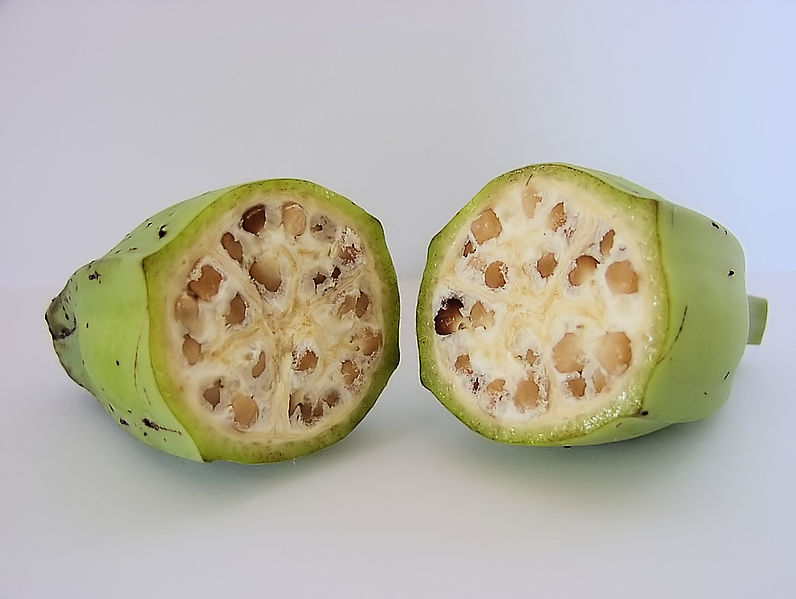
I just wanted to put up a quick post on one of Americans’ favorite fruits. According to the USDA, bananas are the most consumed fruit in the United States, accounting for 25% of fresh fruit consumption.  Bananas are rich in potassium, magnesium, and manganese, and while some who embrace a low-carb lifestyle may find fault with them, they are without doubt a whole, real, food.  While our modern domesticated varieties are very different from wild bananas (and no, the shape of the banana is NOT proof of creationism!), bananas can be part of a healthy diet for most people. Bananas are a staple of many traditional diets, and their leaves are also used for cooking in many cultures.


A wild banana, courtesy of Wikimedia commons. I wonder how they taste?

A wild banana, courtesy of Wikimedia commons. I wonder how they taste?


In America, the word banana is synonymous with the Cavendish banana, but this is certainly not the only variety and many argue it is not the best. “Best” is, of course, subjective.  Choosing a “best” banana is like choosing a best apple*. Seasonality and freshness matter, as does personal preference.


Variety makes life interesting. Genetic variation is necessary for evolution. Food variation makes out diet more interesting (and broadens our nutrient intake while minimizing exposure to potential toxins).  Over the past year or so, I’ve made it my goal to try as many varieties of banana as I can find- so far I’m doing pretty well.


Cavendish bananas (a triploid variant of Musa acuminata) can be found just about anywhere. Grocery stores, cafeterias, and many gas stations have these ubiquitous yellow fruit on offer year round.


At my local grocery store I can usually find other Musa varieties.  Next to a small selection of yucca, aloe, and other somewhat “exotic” offerings I can almost always find plantains (a hybrid between Musa acuminata and Musa balbisiana).  They usually have green plantains, sometimes yellow, and occasionally brown.  The color varies with ripeness. Green plantains are the least ripe and are not sweet, while yellow- or even better, dark brown- plantains are sweet.  Plantains are best eaten cooked. (Personally I love to fry them up in coconut oil. The greens are great with a squeeze of lime, some chile, and salt, while the sweeter fruits are good plain or with a shake of cinnamon or cocoa.)


Occasionally my local supermarket has Niño bananas ( a diploid variant of Musa acuminata known by a number of other names), and I can almost always find these at the Asian supermarket I like to visit. I find that these small bananas have a similar taste, though slightly different texture, than Cavendish bananas.


At my favorite Asian supermarket I’ve also found Burro bananas, which (at least to me) seem like a hybrid between plantains and Cavendish.  It can be eaten cooked or raw.  To me they have a slightly tart, almost lemony, flavor when eaten fresh.  They have a distinct shape- shorter than Cavendish and very angular.


This weekend, I found yet another type of banana to add to my list. I was visiting a friend on Long Island and took a trip through an ethnic supermarket that caters to the local Hispanic population.  Like so many ethnic supermarkets, this store had a fabulous produce section- with a great variety of fruits & vegetables, all really fresh and reasonably priced. The meat department was also extensive, with lots of interesting cuts, including goat! (A friend and I were recently bemoaning the fact that you can rarely find goat in the US- I’ve only ever had it when my family bought whole animals from a local farmer).


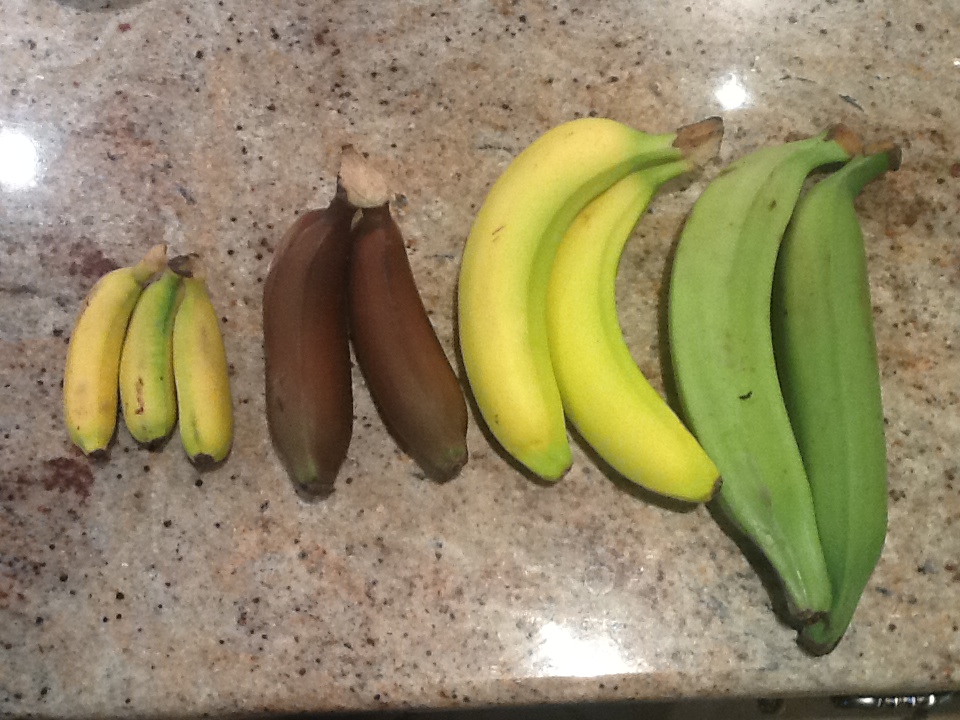
At the store on Long Island I finally came across Red bananas (another triploid variant of Musa acuminata). As the name suggests, this variety is a dark red, almost purple. Otherwise, it looks like a slightly smaller Cavendish.  I picked up a couple but I haven’t tried them yet as I don’t think they’re quite ripe.


The variety of different bananas I picked up.

The variety of different bananas I picked up. From left to right: Niños, Reds, Cavendish, and plantains.


I only have to find one more type of banana to knock off every variety on this list, and I will continue to keep my eyes open for other, unusual varieties. Some of my family members have tried Manzano bananas while visiting Hawaii, and as the name promises, they do taste a bit like apples (Manzano is spanish for apple).


Actually, it looks like Hawaii has many interesting types of bananas, and I’m in desperate need of some sunshine and relaxation… looks like it’s time to go look at plane tickets to Hawaii!!


I wish… I start an EMS elective tomorrow. I’m looking forward to working with first responders as we pick up and transport patients to our University Hospital. From all reports, this is an exciting elective!


*When it comes to apples, GoldRush are, without a doubt, my favorite, but the “best” apple on any given day depends on what is fresh, what is in season, and what you’re in the mood for!

When I tell people that I’m interested in evolutionary medicine, I sometimes get the response “Evolutionary medicine? Or the evolution of medicine?”.


I’ll admit, I’m actually interested in both, but my interest in Evolutionary Medicine is much stronger than my interest in the history and progression of medicine, though this subject can be rather fascinating.  I’ve listened to a course on the history of medicine, attended some extra lectures, and occasionally pick up a book to indulge this interest, but as a third (soon to be fourth, in 2 weeks!) year medical student, I generally have a hard enough time trying to make sense of our modern medical practices without spending too much time thinking about medical history.


Sometimes, however, the evolution of medicine plays out right in front of your eyes.


Today I took the end-of-clerkship exam for my obstetrics and gynecology rotation.  I actually enjoyed this clerkship a lot more than I had initially anticipated (a good thing, as I am increasingly thinking that I will pursue a residency in Family Medicine, which includes obstetrics).  I found myself a lot more enthusiastic to go to the OR to scrub in than I was during my surgical clerkship many months ago (it’s amazing what a year of clinical medical education will do to you).


This clerkship was split into a number of portions: labor and delivery (L&D), night float, women’s health clinic, maternal-fetal medicine (MFM), reproductive endocrinology and infertility (REI), gynecology, and gynecologic oncology… Quite the smorgasbord! On night float and L&D I would frequently end up in the OR to scrub in on a cesarean delivery, on gyn and gyn onc I was in the OR daily for a range of procedures from small biopsies to extensive tumor staging cases.


Major advancements in surgery include the discovery and utilization of anesthesia (Imagine being awake and able to feel everything in surgery! Better not, actually…), and the acceptance of germ theory (for which we should thank John Lister (1827-1912), namesake of Listerine!). Many other discoveries, techniques, and inventions have changed the practice of surgery, but these two are biggies.  The third, looming, problem that needs to be addressed is the perturbation of cytokines during and after surgery, but that is a story for another day!


An interesting progression of surgery is the way in which surgeons gain access to the abdomen and pelvis. Traditionally, as one might imagine, the easiest way to visualize and manipulate the internal organs was to do an open procedure, literally cutting a person open to directly access the area to be operated. In the 1980s, gynecologists started to train in a new technique- laparoscopic or “minimally invasive” surgery- in which a small camera is inserted into the abdomen (which has been inflated with an inert gas to create space*) so that surgeons can visualize the internal structures without opening the belly. Instruments can be introduced into the abdomen through small incisions, and organs and instruments can be manipulated inside the body** and visualized on a screen.


Initially this technique was used for only very small procedures (such as a tubal ligation, “having your tubes tied”), but as surgeons became more proficient, the complexity of the cases that could be performed in this manner increased.  The utility of this technique was recognized, and in the 1990s, general surgeons started to train in laparoscopic techniques.  Now, many surgeries, both gynecologic and general, are performed laparoscopically (somewhere along the way, urologists started using this technique as well).


To be a good laparoscopic surgeon takes a lot of time and training. Cut yourself a 31 or 42 cm stick and imagine trying to do small and precise tasks with the end, which you can only visualize on a screen. Now imagine you have to dissect out delicate pieces of anatomy, correctly identify them, preserve or remove tissue accordingly. As a student on the gynecology service, there was really no reason to scrub into “lap” cases (though they were generally good cases to observe, since the screens make the procedure easy to follow), but on surgery I would sometimes scrub in and occasionally be allowed to steer the camera or “bag” a specimen for removal (really, the resident would drop the sample into the endocatch bag, but they would generally act like it was a great triumph for the student!). It all looks fairly easy until you actually have your hands on the instruments and have to find your way around the belly (or if you’re the med student with the camera, make sure the surgeon is seeing what she wants to see!).


Once you are proficient with laparoscopic techniques, there is a lot you can do. One of the fellows on the Trauma service was a specialist with laparoscopic techniques, and he could “run the bowel” (visualize it from end to end) more rapidly laparoscopically than many surgeons could do open.  Getting proficient, however, takes a lot of time, especially if one is to master skills such as laparoscopic suturing.


Many gynecological and general procedures are now done using laparoscopic techniques. If you have your gallbladder or appendix removed, it’s likely you will have a “lap-chole” or a “lap-appy”, and the offending part will be removed with only a few small incisions visible.


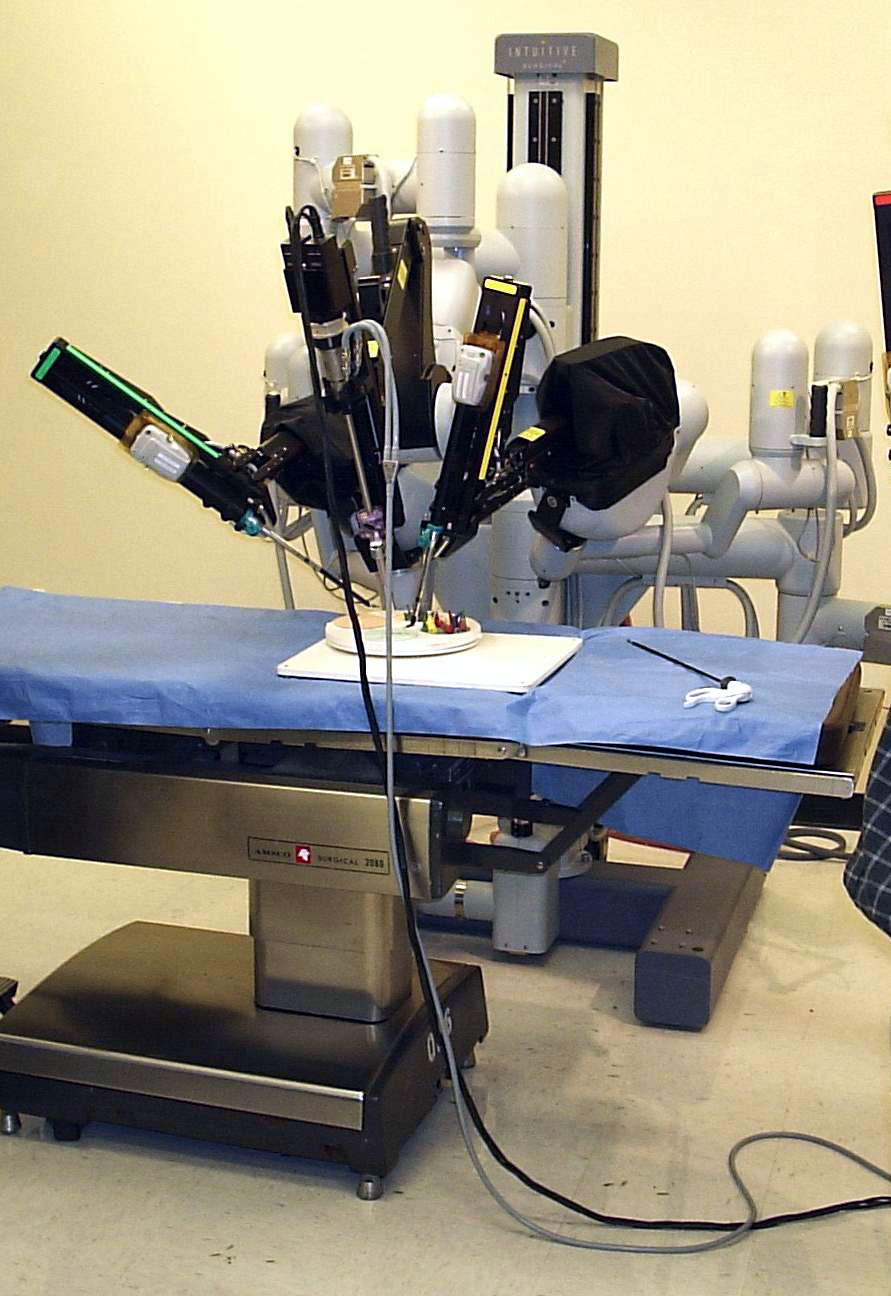
In the last 10 years (I think), there was been “the next step” in laparoscopic surgery… the invention and utilization of a laparoscopic robot.  I should be clear that surgery is still under the control of a surgeon, and no one has “robot surgery”, but the “latest and greatest” (though is it really?) advancement in surgery is “robot assisted laparoscopic surgery”.


In robot cases, the abdomen is accessed similar to a traditional laparoscopic case, except the various instruments are subsequently attached to a robot, instead of being wielded by surgeons (though an assistant was needed at the patients side in the cases I saw to swap out instruments and to suction).  Using “the robot” allows surgeons a lot more precision and accuracy, and according to one of the surgeons I observed, you become proficient much more quickly on the robot than you do with traditional laparoscopic techniques.


Is it progress? 


On my week of gynecology, I witnessed the same surgery (supracervical hysterectomy) done open, laparoscopically, and with a robot-assist.  Some cases, due to the underlying pathology or anatomy, must be done open.   If the uterus is too adherent to other structures or if there might be malignancy that could spread if not removed in one piece, open surgery is probably the best option.  All things being equal, recovery from an open procedure is much longer than for the other options.


When it comes to laparoscopic surgery, robotic surgeries can potentially accomplish much finer tasks than general laparoscopy with significantly less blood loss (the robotic hysterectomy that I observed had an estimated blood loss of 20cc- they probably take more at your annual physical).  The laparoscopic case I saw also had minimal blood loss and was accomplished very quickly- the surgeon has decades of practice under his belt.


So- is this the evolution of medicine? Will robots fill every OR, and will the best surgeons be those who spent many hours as a child (or as an adult, as often is the case) playing video games? (I had to have a quick google, which resulted in this.).


Who am I to say? I’m just a MS3.97 (yes I calculated), with no great knowledge of surgery.  All I can say is that the progression of medicine is amazing.  We (generalists, specialists, surgeons, and other health care practitioners) have amazing technology at our fingertips. We have access to impressive diagnostics, powerful drugs, and amazing technology that allow us to diagnose, treat, and definitively fix disease.  But we must be judicious. Diagnostics and treatments (pharmacologic and surgical) have consequences- some big and some small.


Sometimes the question shouldn’t be “what type of surgery”, or “which drug”, but rather “is surgery necessary?” or “how will treatment help” (I don’t think the cases I described above were unnecessary, but Obstetricians/gynecologists, because of the horrible state of medical-legal affairs, often seem to err on the side of doing too much and/or acting very quickly).  We can do amazing things with medicine. Contrary to how this may sound, I’m not acquiring medical knowledge with no intent of using it. Rather, I think that those with medical knowledge have a responsibility to help patients decide what is the best option for them– physically and personally. At least that’s the kind of doctor I want to be…


But hey- we have some pretty cool tools out there to help us when we need them!


courtesy of wikicommons

A surgical robot- Courtesy of wikicommons


*It’s amazing how laparoscopy can pervert your perception of anatomy. When the abdomen is pumped full of gas it looks like organs are flopping around with lots of space, when in reality everything is rather tightly packed during day-to-day living.

** I write abdomen or “belly”, but I generally mean abdomen and/or pelvis.

I’m back! While I should probably be studying for my upcoming Ob/gyn exams (practical exam tomorrow, written test on Friday), I thought I’d take some time this evening to get part 2 of my trip to Dubai up.


As I mentioned in my last post, people in the United Arab Emirates (UAE) have historically lived either on the coast or in land at oases. Most of the major cities- for example Dubai, Abu Dhabi, and Sharjah – are on the coast, but there are some cities that have grown up around oases in the desert.


During my trip to the UAE I visited Al Ain, the second largest city in Abu Dhabi and the fourth largest city in the UAE. Al Ain was built around an oasis: a source of water and thus agriculture in the desert. From groundwater and runoff from the mountains, farms were built where water was found. I saw a number of oases, all which were extensively planted with date trees. I did also spy one farm where they grew lush grass- animals did not graze this land, but I saw men cutting portions and carrying the greenery to livestock (I saw it being fed to goats).


Looking over the Al Ain Oases. Al Ain also has a truly world class zoo.

Looking over the Al Ain Oases. Al Ain also has a truly world class zoo.


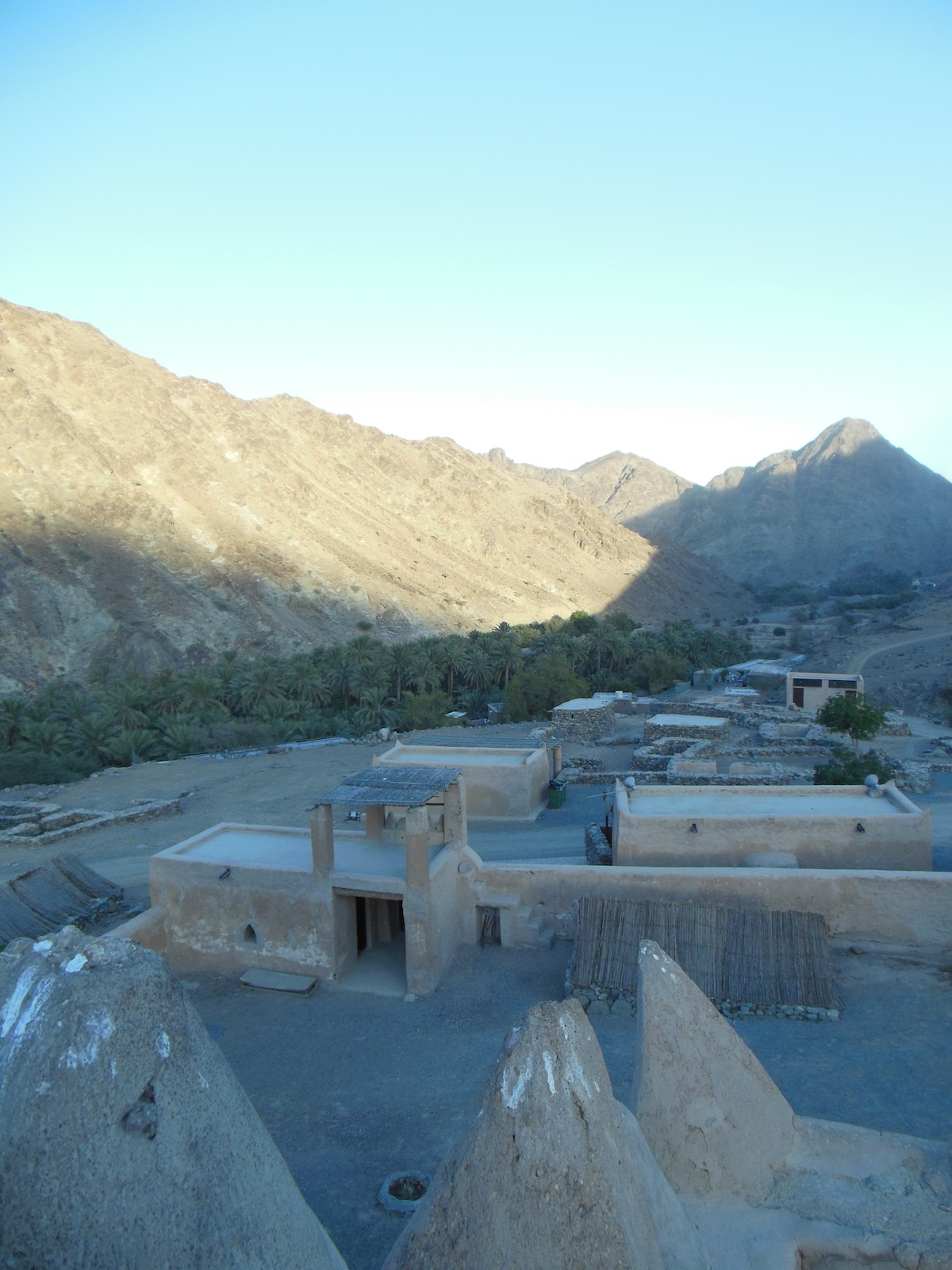
Another oasis, this one at a historic homestead.

Another oasis, this one at a historic homestead.


One more- this one was next to the oldest mosque in the UAE.

One more- this one was next to the oldest mosque in the UAE.


At some oases I saw pens of goats, chickens, sheep, and doves (I believe these are used for falconry training). Camels, which survive with much less water in much harsher lands, were seen roaming the deserts and dunes along highways. As we drove from Dubai to Al Ain, I saw many camel farms as well as camels being ridden and camels loose in the desert. We also passed a camel racetrack!


Speaking of deserts…


A highlight of my trip to the UAE was going on a “desert safari”. My environmentalist side felt a little guilty, but “dune bashing” through the dunes in an area known as “Big Red” (technically in Sharjah) was a lot of fun.


Stunning scenary

Stunning scenery


"Dune Basing." Let your tires down to 15psi, and make some tracks.

“Dune Bashing.” Let your tires down to 15psi, and make some tracks.


The landscape of the desert is incredibly different from anything I’ve ever experienced. I tend to find peace and happiness in green, wooded, and wild areas, but the dunes posses a beauty that is unlike any other natural environment I’ve encountered. We went dune bashing with another friend of my brother (another native Sharjan), who has been taking people out into the desert on safari for thirteen years. Going out into the desert is what he does everyday professionally, but when I asked him what he did with his days off and his evenings he said he spent them in the desert. It’s where he’s happy and it’s where he finds peace- a sentiment I can understand. Nature, in many forms, is deeply soothing.


The UAE gets very little rain. The cities, which aren’t designed with rain in mind, handle even a small amount of rain very poorly, flooding with even the smallest precipitation. Likewise, the sand of the deserts quickly forms an impervious surface when wet, and water runs off into deep ravines known as wadis- dry riverbeds.  If you’re ever camping in the desert, resist the urge to pitch your tent in a wadi- with even a small amount of rain you and your tent may be swept away in a torrent.


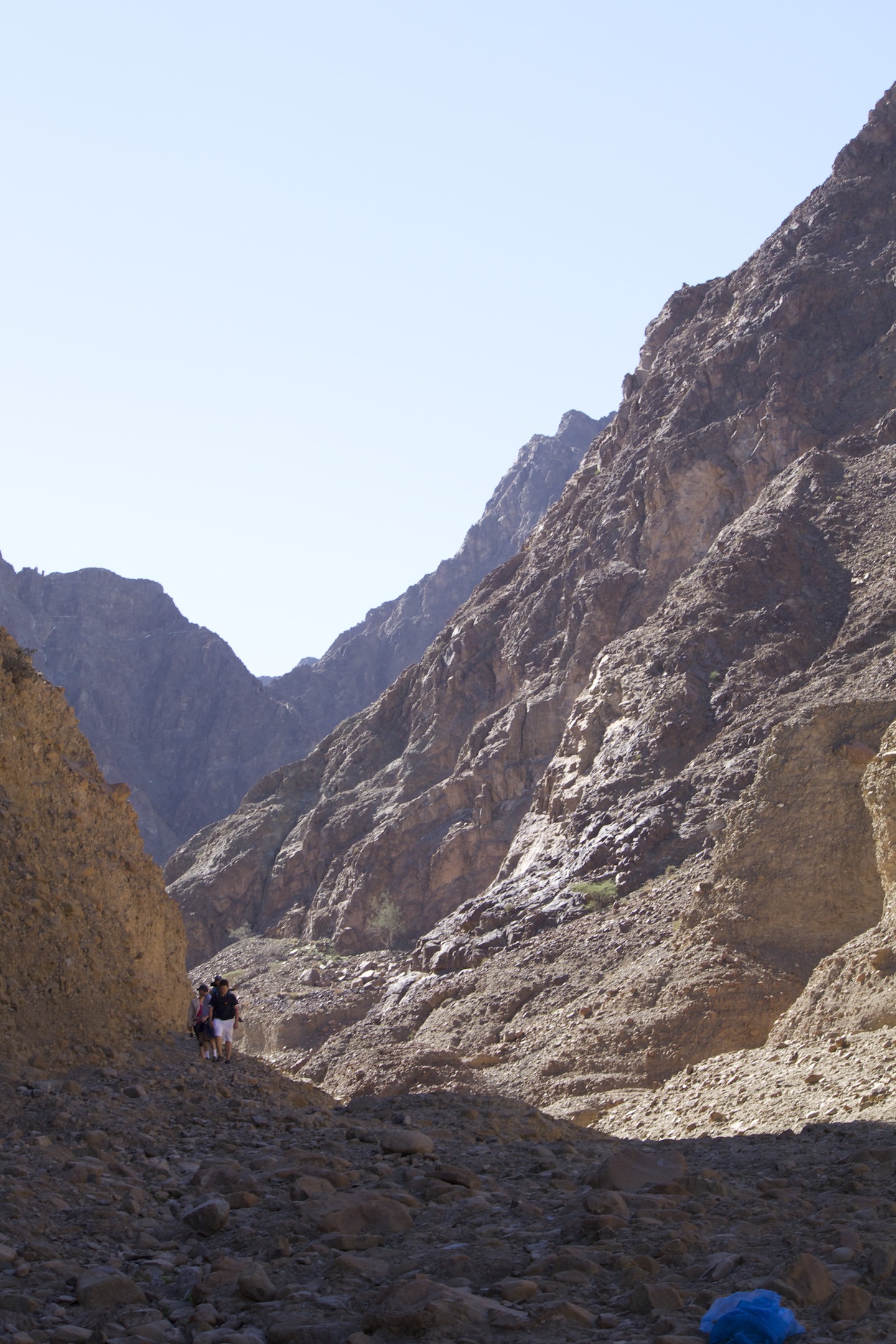
As someone who is named after the geologist Charles Lyell I was immediately fond of the these deep desert ravines that showed how water had eroded through many layers of rock, exemplifying the theory of uniformitarianism. I also really enjoyed the scenery as we went “Wadi Walking” through Wadi Wurayah in Fujeira.


Wadi walking.

Wadi walking.


I hope this gives a scale of these Wadi’s... Some of these scenes really reminded me of Indiana Jones and the Last Crusade, though that movie was filmed at Petra in Jordan.

I hope this gives a scale of these Wadi’s… Some of these scenes really reminded me of Indiana Jones and the Last Crusade, though that movie was filmed at Petra in Jordan.

 
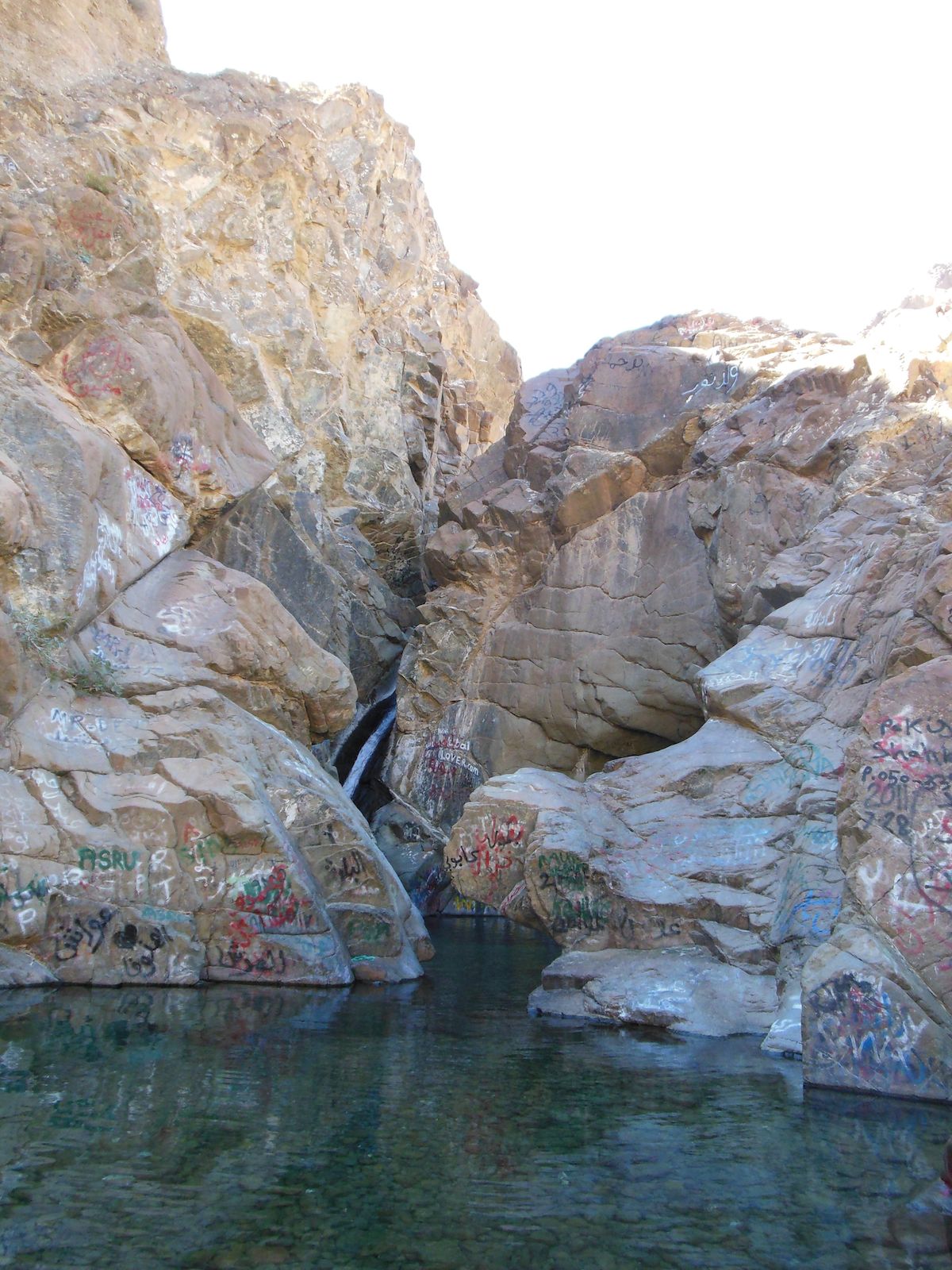
This Wadi is home to the tallest waterfall in the UAE- I haven’t found it documented, but it’s probably 15’ max…


Record breaking waterfall.

Record breaking waterfall.


This is a good time to point out one of the serious problems in the UAE- garbage and graffiti. Every inch of stone at this waterfall was covered in grafitti, as you can see. A more widespread problem is garbage. I was deeply saddened (and annoyed) by all the trash that was around the waterfall and at other beautiful places. Despite the big signs warning against leaving garbage, there was no end of detritus.  I saw people actively throwing cigarette cartons, bottles, and food wrappers throughout the Wadi and at the beach in Dubai. I found the litter in the dunes most demoralizing. People would camp and make bonfires and leave all of their garbage strewn about the site. There were very few expanses of unspoiled sand.


On a day trip to Abu Dhabi I visited the Sheikh Zayed Grand Mosque, the largest mosque in the world outside of Mecca.  Most mosques are closed to non-muslims, but this one is open to the public… as long as you follow “Mosque manners”.


Sheikh Zayed Grand Mosque

Sheikh Zayed Grand Mosque


Mosque Manners

Mosque Manners


I obliged...

I obliged…


The Sheikh Zayed Grand Mosque is stunning. It is massive and beautiful, though the interior design is definitely not my style (perhaps I’m just used to the solemn interior design of churches, but I found the bright colorful baubles and chandeliers out of place). The flooring outside the mosque is marble, and when you take your shoes off (you’re not allowed in the mosque wearing them) the floor is surprisingly cool, despite the desert heat and sun, thanks to radiant cooling. Inside the mosque, bright carpet covers the floor, which is specially designed to be removable in pieces so that it can be regularly cleaned (in accustom with islamic rules).  There are also large digital displays on the wall with 6 times listed: dawn, and the 5 times at which muslims are supposed to pray throughout the day.


As you travel throughout the UAE, you see prayer rooms and mosques tucked away. Muslims are supposed to pray 5 times a day, and while they do not have to pray in a mosque or prayer room, it is preferred. These religious areas are labelled with women’s and men’s entrances, and I believe the “mosque manners” above apply to all. Certainly, muslims can’t always make it to a mosque to pray, and you occasionally see people get out a prayer mat, clean their hands and feet, and pray in a (relatively) quiet corner on a public street.


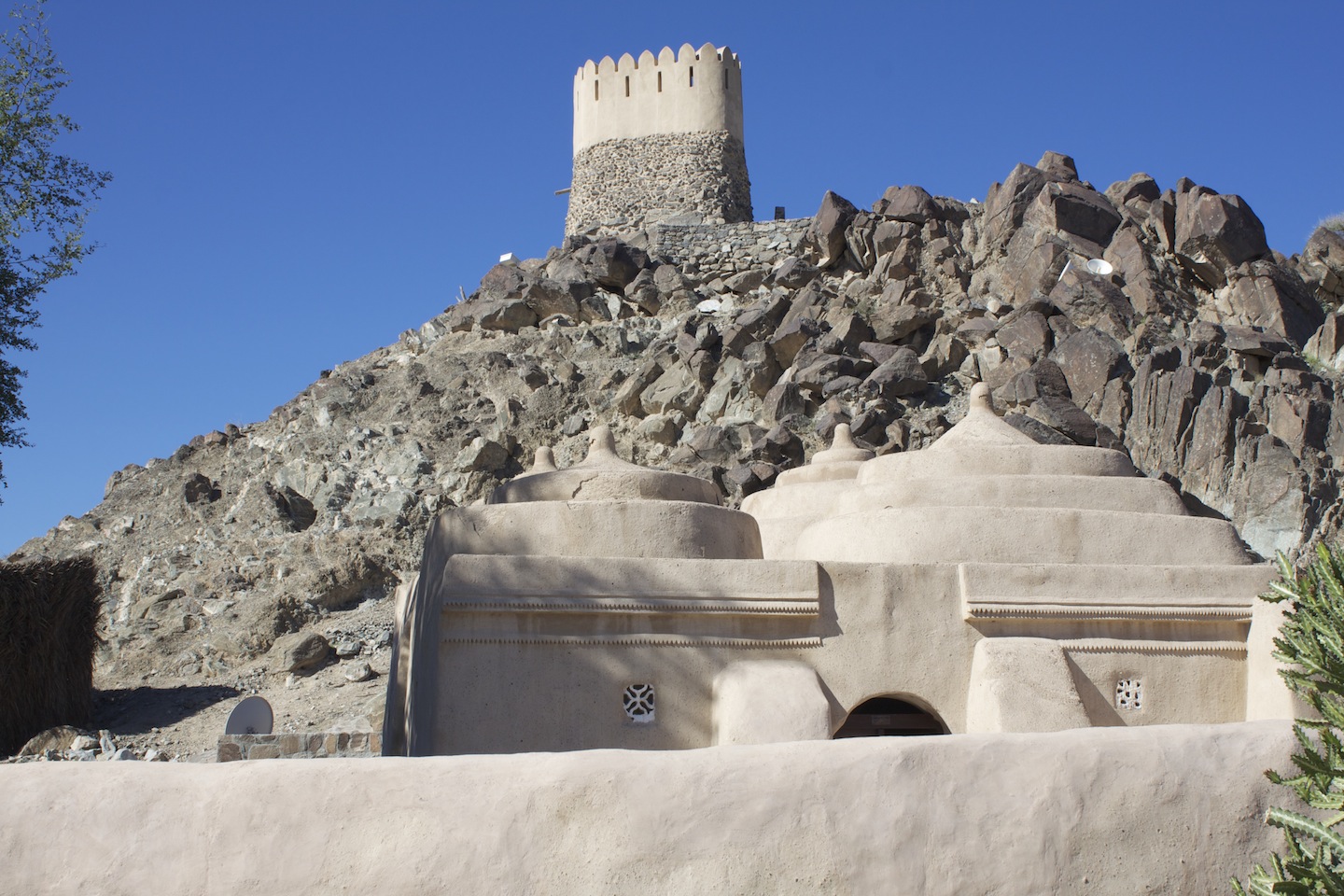
While out in Fujeira, we stopped at the oldest mosque in the UAE. It dates from the 1400s and is overlooked by 2 towers. The architecture is very unique.


The oldest mosque in the UAE. It has very unique architecture.

The oldest mosque in the UAE. It has very unique architecture.


As I mentioned in my last post, UAE law is deeply influenced by Sharia law, and Muslims may not eat pork (or drink alcohol).  Pork (and products with pork in them) is off limits and is kept in its own area in supermarkets. I really couldn’t get enough of these signs.


Look at the cuddly pigs on the wall!

Look at the cuddly pigs on the wall!


Also, while Dubai is a global city and quite tolerant, it remains relatively conservative in comparison to the western world. There are many requests for modest clothes (I awkwardly toured the Emirates Palace Hotel in Abu Dhabi  trying to conceal my flip flops), and public displays of affection are generally frowned upon if not expressly forbidden. (Also, weekends in the Muslim world are Friday and Saturday.)


No kissing (unfortunately I cut off the top right with the request that people wear clothes that cover shoulders and knees.

No kissing (unfortunately I cut off the top right with the request that people wear clothes that cover shoulders and knees.

 
Dubai initially grew along an inlet from the ocean known as “Dubai Creek”. As time passed, the creek became used as a port for traders. As trade increased, the decision was made to develop the creek further, and it was dredged and reinforced so that it could be used for major trade. The creek remains an important port, though it is no longer the dominant port in Dubai (this has fallen to the Jebel Ali Port).  Water taxis (known as Abras) shuttle people across the creek, and we took a trip across (for the cost of 1 dirham, about $0.27).


Abra

Abra


One thing you notice all around the UAE are pictures of the various sheiks that rule the emirates.  Large portraits are on buildings, signs, and posters.  Here’s just one example.


Sheiks

Sheiks


Part 1 of my trip to Dubai started with the Burj Kalifa, the tallest building in the world, so it seems appropriate that this post should come full circle.  I left Dubai on the morning of the 1st, after watching New Years fireworks. No picture I took can do them justice, so here’s a video of the show.


The Dubai fountains also featured heavily in the show. I only saw them during the day, but that’s another site worth seeing! (Talk about the land of excess!)


this is seriously worth watching…

As I let on in a recent post, I spent Christmas and the start of the New Year visiting my brother in Dubai and touring around the United Arab Emirates (UAE). This isn’t a travel blog, but while I was touring around the emirates and learning some of the history of the region I made some observations that I think are worth sharing- especially since I got a great tour of a part of the world that many will never visit. Apologies if this reads like a blog version of a vacation slideshow!

 
Dubai is an otherworldly place.  Obviously built to be “the city of the future”, the skyline is chock-o-block with architectural masterpieces, though many have been stalled or vacant since the financial collapse of 2009. Put in any other city, many Dubai buildings would be iconic, but standing next to the world’s tallest building, the world’s only 7-star hotel (self proclaimed), and other masterpieces, otherwise stunning buildings start to look commonplace.


The tallest building in the world. It's almost twice the height of the Empire State Building.

The tallest building in the world. It’s almost twice the height of the Empire State Building.


Burj Al Arab by night: Taken from Palm Jumeira- an entirely man made island in the shape of a palm tree (http://en.wikipedia.org/wiki/Palm_Islands). The Burj Al Arab is actually built on its own man-made island in the Gulf. *

Burj Al Arab by night: Taken from Palm Jumeira- an entirely man made island in the shape of a palm tree. The Burj Al Arab is actually built on its own man-made island in the Gulf. *


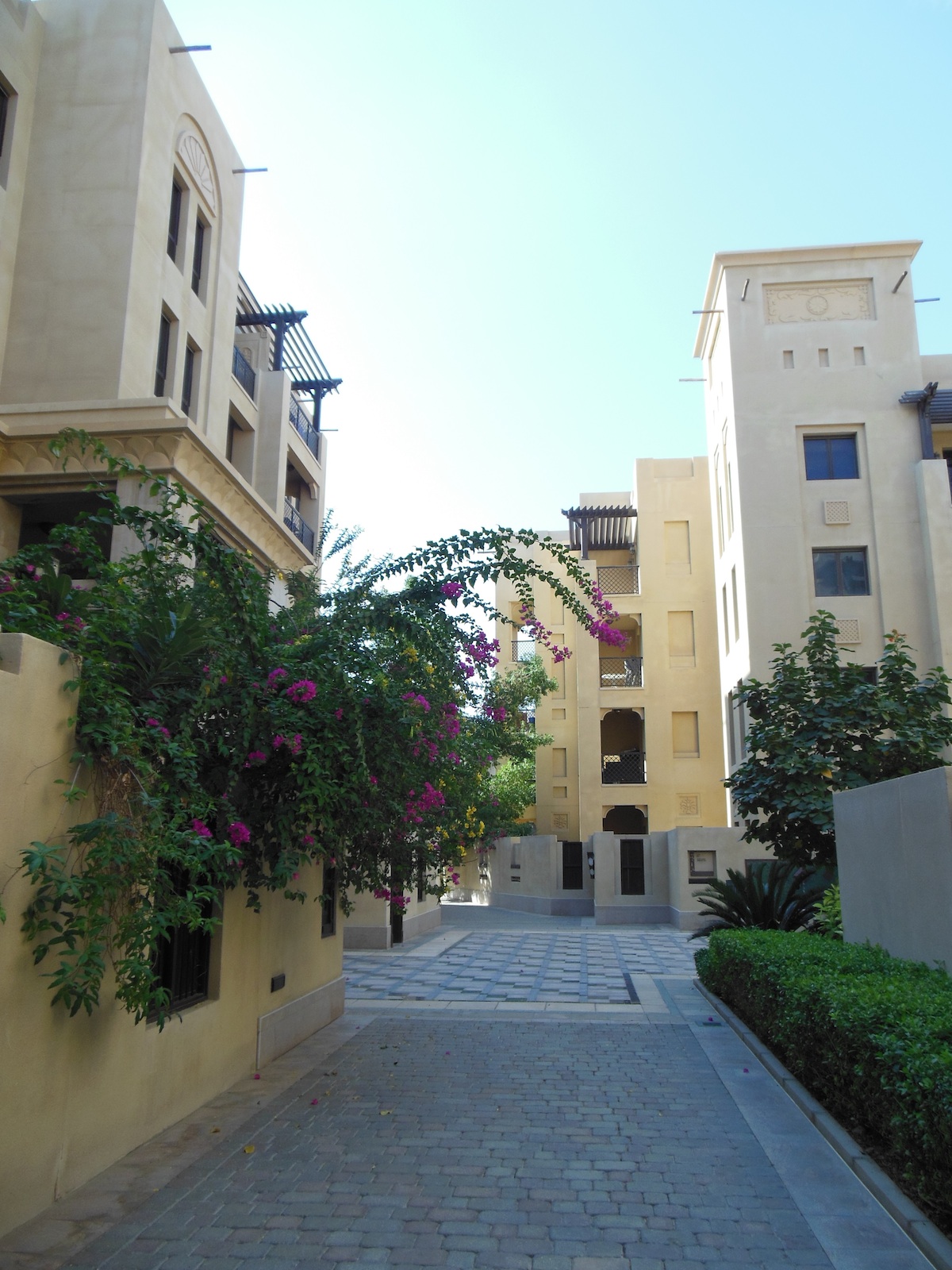
Old Town: While parts of the city look “authentic” (or what you might expect to see in a Middle Eastern city), the oldest building in Dubai is probably from the 60s or 70s. This complex, known as “Old Town”, was finished in 2007.

Old Town: While parts of the city look “authentic” (or what you might expect to see in a Middle Eastern city), the oldest building in Dubai is probably from the 60s or 70s. This complex, known as “Old Town”, was finished in 2007.


Other towers: My brother was able to give me fairly detailed background on many buildings around Dubai, many of which have been stalled or vacant since his arrival in the city 3 years ago. Their vacancy does not hinder their stunning architecture.

Other towers: My brother was able to give me fairly detailed background on many buildings around Dubai, many of which have been stalled or vacant since his arrival in the city 3 years ago. Their vacancy does not hinder their stunning architecture.


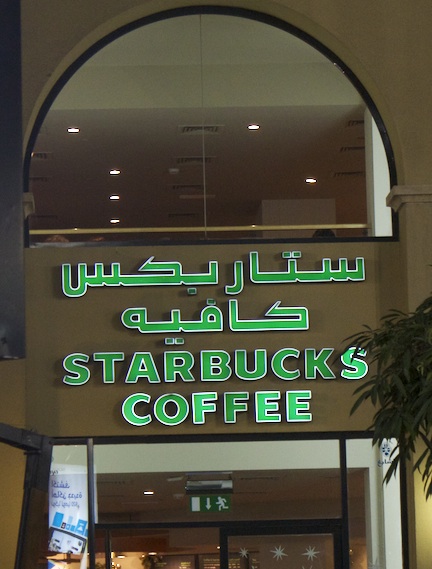
On the surface, there seems to be little “traditional living” or “ancestral health” wisdom to glean from Dubai.  It is a very modern city with immigrants, corporations, and businesses from around the world.  Within a block of my brother’s home you can get Kentucky Fried Chicken, Nando’s (a chicken restaurant originally from South Africa), and Al Tazaj (a chain BBQ chicken restaurant from Saudi Arabia) and that’s just to name the chicken restaurants (Popeye’s chicken is also popular, but there isn’t one within a block of my brother)! You also see The Cheesecake Factory, Texas Roadhouse, PF Chang’s and just about any American or international chain you could name (though I don’t think I saw a Chipotle).


I’m confident that if humans develop an extraterrestrial community, this will be the first chain available in outer space.

I’m confident that if humans develop an extraterrestrial community, this will be the first chain available in outer space.*


Of course, Dubai only recently became a modern global city. Dubai changed rapidly from a small pearling center and regional trading port to a cosmopolitan global hub fuelled largely by the discovery of oil in the region.  Dubai also developed laws and practices that encouraged rapid expansion of business and real-estate on a global scale . Older Emirati have truly seen it all, from the days of very basic living to modern global excess.  As someone who is deeply interested in ancestral health, I asked around and read about the traditional ways of living in this part of the county. While no one today lives an “ancestral” lifestyle, the memory of traditional days is not yet forgotten.


The easiest place to start, of course, is food.  Until relatively recently, the diet of the Middle East was limited to foods that could be locally produced or transported great distances without refrigeration. While traders would bring spices and rice, which was a staple of the diet, perishable food was limited to what is locally available- which isn’t much. On the shore, seafood was a staple. I was told by a local Emirati (a good friend of my brother) that a generation ago, the main meal of the day would be rice and fish. Fish, readily available from the sea, was relatively cheap, while meat was expensive. Today this has reversed and meat (usually lamb, but sometimes goat and increasingly beef) is cheaper and more commonly eaten while fish is now more expensive and less common.


One of the highlights of my trip to the United Arab Emirates (I spent time in Abu Dhabi, Fujairah, and Sharjah in addition to my time in Dubai) was an evening walking tour around Sharjah led by my brother’s friend Khalid. Khalid is a native Emirati, with a deep knowledge of the area as well as the history and culture of the region. He kindly took us on a tour of some of the markets of Sharjah, and graciously answered my endless questions about the food, history, culture, and religion (and occasional lack thereof) in the area.


The first stop on our tour of Sharjah was the local fish market, where merchants sell fresh catch from dawn until late in the evening (they get two deliveries of fish per day).  Here we saw the wide variety of fish that are caught, sold, and eaten in the area.


The fish market in Sharjah**

The fish market in Sharjah**


I recognized a number of fish and marine life on offer. There were shark, rays, and tuna, as well as small reef fish (such as angel fish, parrot fish, and grunts) that I’m familiar with as a SCUBA diver.  In Dubai, I saw Tiger Prawns (shrimp) larger than I’ve ever seen: almost a foot long. It appears that this species is on the seafood “red list” as, I’m sure, are other species I spied in the market. An interesting aspect of the fish market was a large station at the end of the market where men would prepare your purchase (fish, squid, or shrimp). It cost 1 Dirham (about $0.27 US) to have a fish cleaned, 2 Dirham to have a kilo of squid cleaned, or 3 Dirham to have a kilo of shrimp cleaned (the most expensive item on the list). As someone that peels her own shrimp, I recognize that ~$0.35/lb is a cheap price for cleaning shrimp!


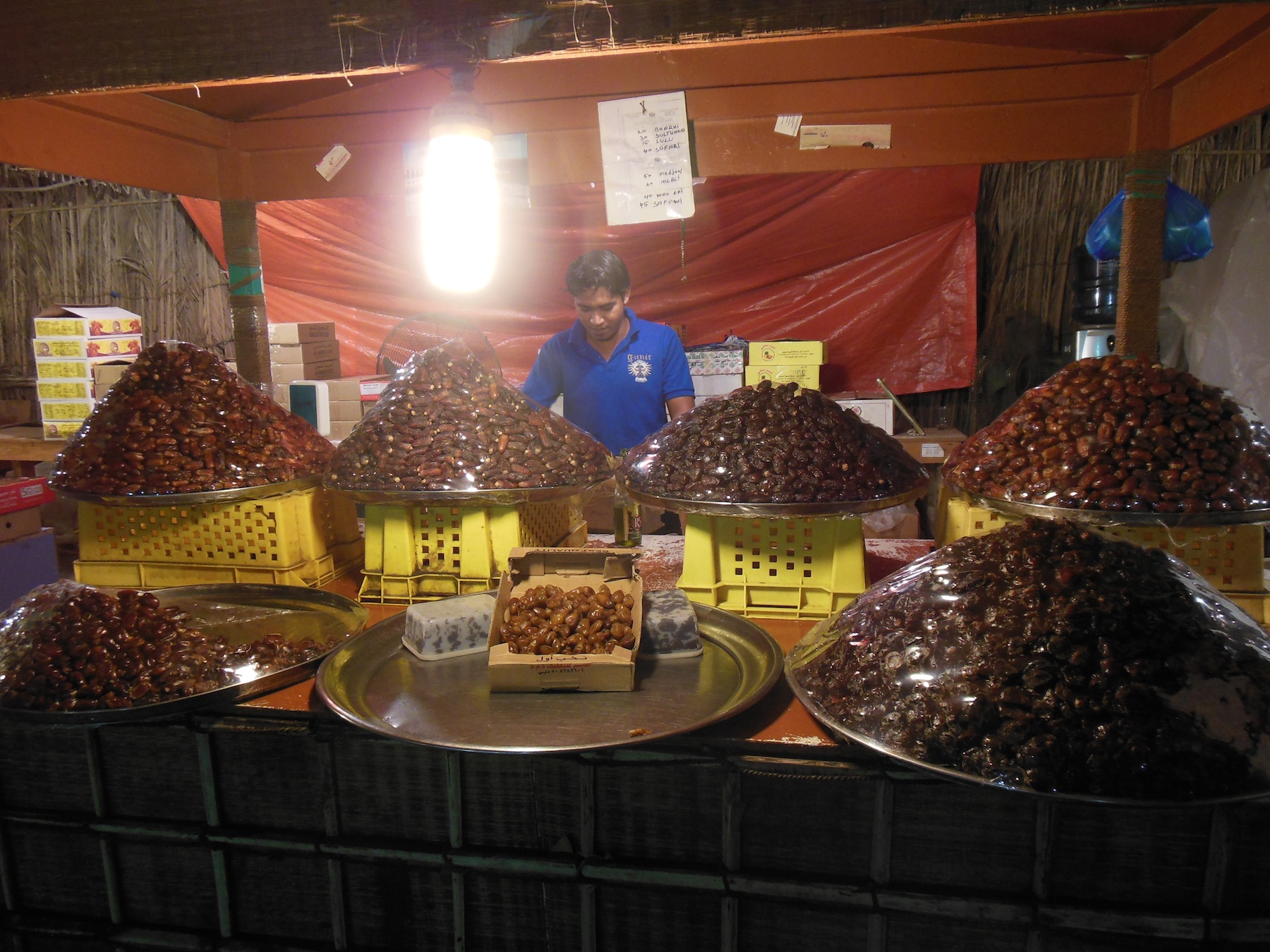
Traditionally, fish was also dried and used for trading, fertilizer, and animal food.  Dried fish would make its way to the oases in the desert (anything fresh from the coast would spoil before it could reach any inland populations) where it could be sold or traded for products of the oases. The #1 product of the oases has traditionally been dates.


The cultivation of date palms (Phoenix dactylifera) has been the most important form of agriculture in the area now known as the UAE.  Date palms not only provide their owners with high calorie fruit, but also supply leaves that can be used to make fans and baskets, branches that can be used to make walls and roofs, bark fibers that are suitable for making rope and for stuffing pillows and saddles, and dead trunks that can be used as beams. Date fruits can be eaten fresh, dried, crushed for juice, or boiled and packed in bags made of palm leaves. Fruits stored in this way could be kept for a long time and were used as staple foods for men and animals on long journeys across the desert [1].


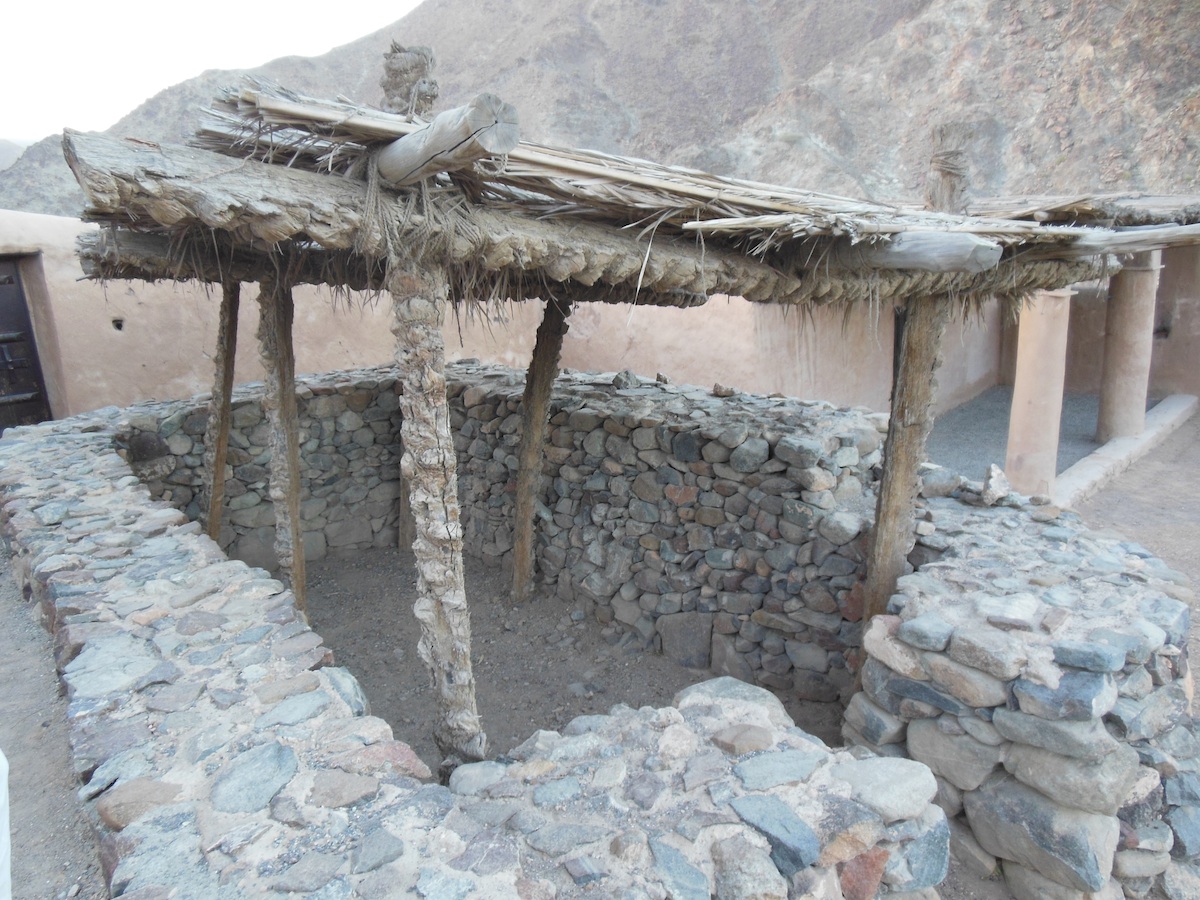
Palms of many uses. You can see in this open kitchen in a historical abode that palms trunks were sometimes used as beams and fronds were used as roofing or for walls.

Palms of many uses. You can see in this open kitchen in a historical abode that palm trunks can be used as beams and fronds used as roofing or walls.


This was a small building on the same homestead. Dates were placed on the ridged floor and a large trunk was used to crush them, with the juice running off into the depression where it could be collected.

This was in a small building on the same homestead. Dates were placed on the ridged floor and a large trunk was used to crush them, with the juice running off into the depression where it could be collected.


Today most dates are eaten whole- usually dried, but sometimes fresh when in season.  There are MANY types of dates, a number of which I sampled. I’d be lying if I said I weren’t a date enthusiast (though it is a fondness I’ve only developed in the last couple years). Varieties have different characteristics, though they are all incredibly sweet (one shop keeper tried to tell me that a certain variety was lower in sugar and therefore “good for diabetics”. I think not…).


Date Poster: This is an incomplete list, but it gives you an idea of the variety available. I expect it is like the many types of apples that were once available in the US. While you can still get a wide variety today from growers and specialty markets, a few types have started to dominate the market. (In the US, I’ve only seen two types for sale in stores Medjool and Deglet Nour. To me, the Deglet Nour is the Red Delcious of the date world- not worth bothering with- but maybe I’m picky.).

Date Poster: This is an incomplete list, but it gives you an idea of the variety available.


Many types of dates are available from different shops and stands in the UAE, but I definitely didn’t see many of the varieties that are shown above.  I did see some unique dates, but there were a few varieties that I saw over and over again. I imagine that the diversity of dates is much like the diversity of apples available in the US. While you can get a good selection from growers and specialty markets, a few types make up the majority of the market. (As far as dates go, in the US I’ve only seen two types for sale in stores: Medjool and Deglet Nour. To me, the Deglet Nour is the Red Delcious of the date world- not worth bothering with- but maybe I’m picky.).


Date alley: Perhaps my favorite part of our Sharjah tour. With the exception of the stand directly on the right that sells coconuts, all of these stands sell dates.

Perhaps my favorite part of our Sharjah tour. With the exception of the stand directly on the right that sells coconuts, all of these stands sell dates.


One of the many date stands. Merchants were keen to tell you the price and source of dates.

One of the many date stands. Merchants were keen to tell you the price and source of dates.


The price of dates varied widely. At the street markets, I saw dates from 8-16 Dirham/kg (~ $1-$2/lb), in Waitrose (a nice supermarket) they were 22-35 Dirham/kg (~$3-$4/lb), and at fancy date stores at the Dubai Mall they were 165-240 Dirham/kg ($20-$40/lb)! I tasted dates from all sources and will say that the cheapest and the most expensive were the best- the ones from Waitrose were a disappointment. Lining them all up and having a blind taste test would be fun- I’ll put that on my list for next time!


The third and final local food that played a role in traditional diets is camel products- usually camel milk. If you haven’t seen it already, check out my recent post.


Camel milk of many colors: rose, cardamon, and saffron flavored alongside plain.

Camel milk of many colors: rose, cardamon, and saffron flavored alongside plain.

 
Though there has never been enough wildlife to support a population of hunter-gatherers in this part of the Middle East, there is (or was) some game that has historically been hunted.  Such sources could not be relied upon, but provided much appreciated variety and sustenance when found. Traditionally, falconry was used for hunting.  Falconry remains a deeply loved sport in the Emirates, one that is seen as part of Emirati heritage and supported by the Sheikhs.


Falconry remains a popular sport in the emirates.

Falconry remains a popular sport in the emirates.


Coffee also holds a special cultural significance in the UAE. Arabic coffee, usually spiced with Cardamom, is offered to guests as a sign of hospitality. The hotel where my brother lives (a common choice of housing) has dates and Arabic coffee on offer to guests at all times in the lobby. The coffee (at least to my taste) is rather weak, though the spice is pleasant.


While I’m interested in traditional diets, I’m also interested in what people are eating now.  Maybe I’m a weird tourist (or maybe I’m just easily amused), but when I’m traveling I always love to take a trip through a local supermarket to see what people are eating. The Waitrose at the Dubai Mall did not let me down…


First to the meat department:


Grass fed beef from NZ and Grain fed beef from Australia. I really like that you can buy the two side by side. I wish I’d found two comparable cuts so I could compare the prices…

Grass fed beef from NZ and Grain fed beef from Australia. I really like that you can buy the two side by side. I wish I’d found two comparable cuts so I could compare the prices…


Pork Department: Islam is the national religion in the UAE, and laws are based around Sharia law. Muslims may not drink alcohol or eat pork (amongst other things). That being said, non-Muslims may buy pork at supermarkets and alcohol is served at hotels (though not in Sharjah).

Pork Department: Islam is the national religion in the UAE, and laws are based around Sharia law. Muslims may not drink alcohol or eat pork (amongst other things). That being said, non-Muslims may buy pork at supermarkets and alcohol is served at hotels (though not in Sharjah).


 Interesting finds in the pork department: The pork department isn’t just a meat counter- you can also find processed foods that include pork products. The Corn Bread has Pork Fat in it, but I couldn’t find an offending ingredient in the Pop-tarts (though I do find Pop-tarts offensive!). The bacon flavored crackers are obviously taboo!

Interesting finds in the pork department: The pork department isn’t just a meat counter- you can also find processed foods that include pork products. The Corn Bread has Pork Fat in it, but I couldn’t find an offending ingredient in the Pop-tarts (though I do find Pop-tarts offensive!). The bacon flavored crackers are obviously taboo!


I didn’t travel halfway around the world just to visit supermarkets. In addition to spending quality time with my brother and his family, I also got to see A LOT of sites in the surrounding emirates, but as this post is already getting rather long, maybe I’ll save that for next time!


Credit where credit due. I took most pics, but the ones marked by a * were taken by a friend Amber, and ** were taken by Khalid. 

1.            Heard-Bey, F., From Trucial States to United Arab Emirates. 2011, London: Motivate Publishing.